
Tolomatic Electric Rod-Style Linear Actuators
Controlled linear motion for pressing, lifting, positioning, and pneumatic or hydraulic cylinder replacement.
Scott Equipment Company helps manufacturers in North and South Carolina review Tolomatic electric rod-style actuator applications, compare motion technologies, and support the related components needed to turn an actuator selection into a working machine solution.
Start With the Cylinder Application
Review the load, force, stroke, speed, environment, and control requirements before selecting the rod-style actuator family.
What Is an Electric Rod-Style Linear Actuator?
An electric rod-style linear actuator creates straight-line motion in a package that looks similar to a traditional cylinder. Instead of using air or hydraulic fluid, it uses an electric motor and screw-driven mechanism to extend and retract the rod.
This makes rod-style electric actuators useful when a machine needs controlled pushing, pulling, lifting, pressing, clamping, positioning, or cylinder replacement. For the full Tolomatic product overview, visit Scott Equipment’s Tolomatic actuators and motion control solutions page.
Scott Equipment’s Role
Scott Equipment Company helps customers review the actuator application before the product family is selected.
Our team can help gather force, stroke, speed, duty cycle, environment, motor, drive, and installation details so the actuator is matched to the machine rather than selected by size alone.
Better Position Control
Electric actuators can support controlled positions, speeds, acceleration, deceleration, and force profiles when the machine needs more than simple extend-and-retract motion.
Cleaner Operation
Electric motion removes hydraulic fluid from the axis and reduces the need for compressed air at the point of motion.
Repeatable Motion
Servo or stepper-controlled electric actuators can help improve repeatability, feedback, and process consistency.
Cylinder Replacement
Rod-style electric actuators are often reviewed when a customer wants to replace a pneumatic or hydraulic cylinder with a more controlled electric axis.
Start With the Motion Requirement
A rod-style actuator may look similar to a cylinder, but proper selection depends on the complete motion profile, not just bore, stroke, or mounting dimensions.
How Tolomatic Electric Rod-Style Actuators Work
Tolomatic electric rod-style actuators use screw-driven technology to convert rotary motor motion into linear rod movement. The screw type has a major impact on actuator performance, efficiency, force capacity, speed, cost, and expected life.
Choosing the right screw technology starts with the application. A high-speed positioning axis, a high-force press, and a low-speed adjustment mechanism may all need different actuator designs.
Scott Equipment’s Role
Scott Equipment Company can help review whether the application is better suited for a ball screw, roller screw, or more economical nut design.
The review should include force, speed, duty cycle, life, environment, and how the actuator will be mounted and controlled.
Ball Screws
Ball screws are designed for efficient, low-friction motion. They provide smooth and precise movement for applications that need repeatable positioning and good speed.
They are often used for packaging, positioning, light pressing, material handling, and machine adjustment.
Roller Screws
Roller screws are built for high-force, long-life, and higher-duty applications. More contact points help distribute load and support demanding motion profiles.
They are often reviewed for pressing, forming, hydraulic replacement, and high-force positioning.
Acme, Bronze, or Solid Nut Designs
Some rod-style electric actuators use acme, bronze nut, or solid nut designs for simpler motion requirements.
These can be useful for lower-speed, moderate-force, shorter-duty, or cost-sensitive applications.
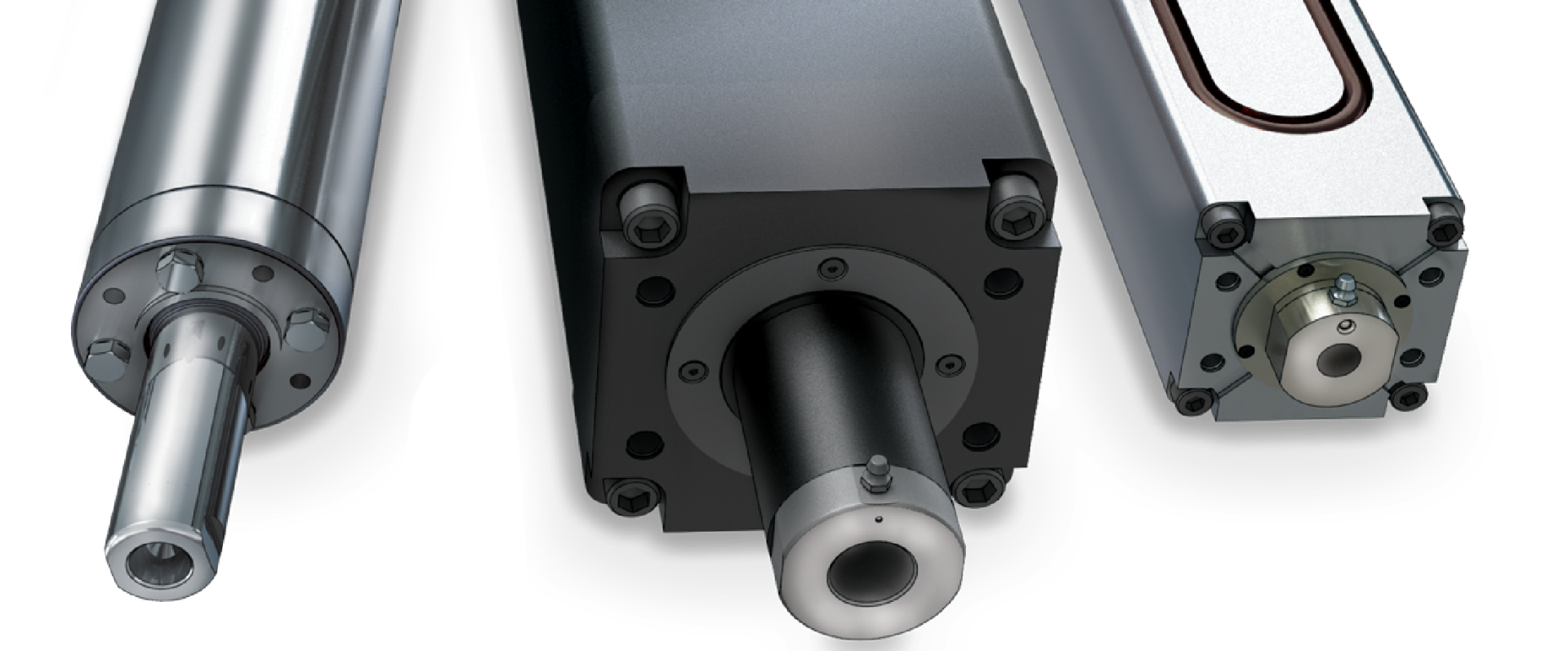
Rod-Style Actuator Options for Different Machine Needs
Tolomatic offers multiple electric rod-style actuator families. Each product family supports a different range of force, speed, environment, motor compatibility, and machine design needs.
Scott Equipment Company can help determine which family should be reviewed based on the operating conditions and the larger machine objective.
Application Before Part Number
Rod-style actuators may be used for simple replacement work, but many projects require deeper review.
The best family depends on force, cycle rate, environment, controls, motor selection, and whether the goal is a pneumatic replacement, hydraulic replacement, or new machine design.
RSA Series
The RSA Series is a flexible electric rod actuator family for accurate, high-force motion in general industrial automation.
It may be considered for motion control, valve actuation, pressing, injection molding, and pneumatic or hydraulic replacement applications.
RSX Series
The RSX Series is built for extreme-force electric actuation and hydraulic-class applications.
It may be reviewed for high-force pressing, forming, heavy-duty positioning, and applications where a hydraulic cylinder is creating maintenance or control concerns.
RSH Series
The RSH Series is a hygienic electric rod-style actuator family for food, beverage, and sanitary washdown applications.
Learn more about Tolomatic hygienic stainless steel actuators.
ERD Series
The ERD Series is an economical electric rod cylinder for applications where customers want a cost-effective electric replacement for simple pneumatic motion.
It may fit light-to-medium force applications, machine upgrades, prototypes, and positioning axes.
GSA Series
The GSA Series adds guidance to the actuator package. This can help when the application involves side-load concerns or supported load movement.
It may be used in pick-and-place, packaging, material handling, and compact positioning applications.
Integrated Servo Options
If the application needs a compact actuator with the motor integrated into the actuator body, the IMA and IMA-S families may be worth reviewing.
Read more about Tolomatic integrated servo linear actuators.
Do Not Select the Family by Force Alone
Force is important, but actuator selection also depends on speed, stroke, side loading, environment, motor compatibility, feedback, duty cycle, and required service life.
Where Electric Rod-Style Actuators Fit
Tolomatic electric rod-style actuators can be used across many machine types. The strongest fit is often found where the application needs force, repeatability, controlled motion, cleaner operation, or better feedback.
Scott Equipment Company supports these applications for maintenance teams, plant engineers, OEMs, machine builders, and integrators throughout the Carolinas.
Backed by a Team Approach
Your local Scott Equipment Account Manager can help identify the opportunity and coordinate support from our Technical Team and Tolomatic resources.
That team approach helps connect the actuator with controls, cabling, sensors, safety, mounting, and installation support.
Hydraulic Cylinder Replacement
Electric rod actuators may help reduce hydraulic leaks, improve control, remove hydraulic power unit concerns, and add feedback to the motion axis.
Pneumatic Cylinder Replacement
Electric rod-style actuators may fit applications that need multiple positions, controlled speed, repeatability, feedback, or reduced compressed air demand.
Pressing and Forming
Controlled force and repeatable motion can support pressing, forming, bearing insertion, crimping, joining, and similar production tasks.
Food and Beverage Automation
Hygienic actuator options can support filling, cutting, slicing, pressing, pumping, packaging, and washdown product-handling applications.
Medical and Life Science Equipment
Electric rod actuators can support clean, repeatable motion for sample handling, dispensing, diagnostic machines, automated lab systems, and equipment positioning.
Material Handling
Use rod-style actuators for pushing, lifting, sorting, positioning, transferring, indexing, conveyor stops, lift tables, and transfer stations.
Robotic and Automated Workcells
Tolomatic actuators can support robot-adjacent motion, fixture movement, auxiliary axes, and loading or unloading equipment around the workcell. Learn more about Scott Equipment’s robotic automation solutions.
Automotive and General Manufacturing
Support assembly, positioning, fixture movement, tool motion, weld support, cutting support, and automated machine adjustment.
When Electric Rod-Style Actuators Make Sense
Electric, pneumatic, and hydraulic actuators each have a place in industrial automation. The goal is not to replace every cylinder with an electric actuator. The goal is to select the technology that best fits the motion requirement.
Electric rod-style actuators are often reviewed when customers need more control, cleaner operation, better feedback, or reduced fluid-power maintenance.
Conversion Support
Scott Equipment Company can help review whether an electric actuator is a practical replacement for an existing pneumatic or hydraulic cylinder.
For deeper information, visit our hydraulic to electric actuator conversion page.
Electric Rod-Style Actuators
Best when the application needs controlled motion, multiple positions, clean operation, feedback, or reduced fluid-power maintenance.
Common examples include positioning, pressing, filling, machine adjustment, test stands, and washdown automation.
Hydraulic Cylinders
Best when very high force or power density is the top requirement and the hydraulic system is already performing well.
They also require attention to power units, fluid maintenance, hoses, seals, leaks, and heat.
Pneumatic Cylinders
Best for simple, fast, and cost-effective extend-and-retract motion.
They may be less ideal when the application needs multiple positions, detailed motion profiles, or reduced compressed air demand.
The Right Technology Depends on the Application
Electric actuation can solve many control, maintenance, and cleanliness problems, but pneumatics and hydraulics still make sense in the right applications. Scott Equipment Company can help compare the options before the machine is changed.
Information Needed to Select an Electric Rod-Style Actuator
The best actuator selection starts with good application data. Force, stroke, and speed are important, but they are only part of the review.
If you do not have every detail, Scott Equipment can help identify what information is needed next.
Send Us What You Have
A current cylinder part number, machine photos, drawings, motion description, or rough requirements can be a helpful starting point.
Our team can help determine what additional details are needed for sizing and selection.
Helpful Application Details
Tools That Help With Selection and Integration
Tolomatic provides tools that help engineers size, configure, and integrate electric rod-style actuators. These tools are useful, but they work best when the application data is accurate.
Scott Equipment can help customers review these resources and coordinate with Tolomatic when the application requires additional technical input.
Review Before Final Selection
Online tools help narrow the actuator selection, but they do not replace a clear review of the machine and control requirements.
Scott Equipment Company can help review the output before the order is placed.
SizeIt Actuator Sizing Software
Tolomatic’s sizing software helps evaluate actuator options based on speed, force, and life requirements.
Your Motor Here
Tolomatic’s motor mounting resources help match standard motors to compatible actuator mounting options.
CAD Models and Product Resources
CAD models, manuals, and technical documents help confirm fit, mounting, and design details before ordering.
Drive and Controls Review
The actuator, motor, drive, feedback, controls, and cabling need to work together. Scott Equipment can help review these details.
More Than an Actuator: Build the Complete Motion Solution
Many electric actuator projects require more than a single component. The application may also involve mounting hardware, brackets, motors, drives, controls, cables, sensors, safety devices, enclosures, or documentation.
Through Scott Equipment Company’s We Build It, You Install It program, we can help customers review whether the actuator and supporting components can be organized into a more complete solution.
Scott Equipment’s Role
Not every actuator application requires a custom assembly, but many benefit from organized components, repeatable kits, or value-added support.
Our team can review the installation, supporting components, repeatability requirements, and maintenance needs before defining the project scope.
Mounting and Brackets
Review mounting concepts, adapter plates, brackets, and hardware needed to install the actuator properly.
Controls and Cabling
Support related drives, cables, connectors, sensors, switches, and control-panel needs.
Safety and Access
When the actuator is part of a larger machine, related guarding, access, and automation safety solutions may need to be reviewed by qualified safety professionals.
Repeatable Kits
Document repeatable actuator assemblies or installation kits for similar machines, lines, or future projects.

Common Questions About Tolomatic Electric Rod-Style Actuators
These answers provide a practical starting point. Final actuator selection should be based on the actual force, stroke, speed, duty cycle, mounting, environment, and controls of the application.
What is an electric rod-style actuator?
An electric rod-style actuator uses a motor and screw-driven mechanism to create controlled straight-line motion. It is similar in form to a cylinder, but it uses electric power instead of air or hydraulic fluid.
When should I consider an electric rod-style actuator?
It may be a good fit when the machine needs controlled position, repeatable motion, multiple stopping points, cleaner operation, or reduced hydraulic or pneumatic maintenance.
Can Tolomatic electric rod-style actuators replace hydraulic cylinders?
In some applications, yes. They may fit when the goal is cleaner operation, better control, reduced fluid maintenance, or better feedback. The application should be reviewed before making the change.
Can Tolomatic electric rod-style actuators replace pneumatic cylinders?
In some applications, yes. They may be useful when the machine needs more control than simple extend-and-retract motion, including multiple positions, controlled speed, repeatability, and reduced compressed air demand.
What is the difference between a ball screw and a roller screw?
A ball screw is efficient and works well for many precision motion applications. A roller screw is typically used for higher-force, longer-life, or higher-duty applications.
What information is needed to size an electric rod-style actuator?
Helpful information includes force, load, stroke, speed, duty cycle, mounting orientation, available space, required life, environment, controls, and any side-load or moment-load concerns.
Does Tolomatic offer washdown-ready electric rod-style actuators?
Yes. Tolomatic offers hygienic and stainless steel rod-style actuator options for food, beverage, pharmaceutical, and other washdown applications.
Can Scott Equipment help with the complete actuator installation?
Yes. Depending on the application, Scott Equipment can help review supporting components such as brackets, cabling, sensors, safety devices, control panels, and repeatable kits through We Build It, You Install It.
Still Not Sure Where to Start?
Send Scott Equipment Company the current cylinder information, application description, photos, drawings, or machine details you have. Our team can help identify the next information needed for review.
Review Your Electric Rod-Style Actuator Application with Scott Equipment
Tolomatic electric rod-style linear actuators can help improve motion control, reduce maintenance, support cleaner machine designs, and replace pneumatic or hydraulic cylinders in the right applications.
Whether you are replacing a hydraulic cylinder, improving a pneumatic axis, designing a new machine, or reviewing a washdown application, Scott Equipment Company can help evaluate the application and work with Tolomatic to identify the right solution.
Scott Equipment Company provides trusted automation solutions and application support for manufacturers throughout North and South Carolina.
Trusted Automation Solutions for the Carolinas Since 1977.