Hydraulic to Electric Actuator Conversion
Cleaner Motion. Better Control. Less Hydraulic Maintenance.
Hydraulic cylinders are familiar and powerful, but leaks, maintenance, noise, heat, and limited position control can create long-term challenges. Scott Equipment Company helps manufacturers, OEMs, machine builders, integrators, and maintenance teams review hydraulic actuator applications and evaluate whether electric actuator conversion is a practical fit.
Focus Areas
Explore the key considerations when converting hydraulic actuator systems to electric motion.
A Practical Resource for Hydraulic to Electric Actuator Conversion
Hydraulic actuator systems are widely used across manufacturing because they can provide high force and proven machine performance. In many applications, hydraulics continue to be the right solution. However, more customers are reviewing hydraulic systems because of leaks, maintenance demands, inconsistent performance, energy use, noise, heat, and the need for better machine data.
Electric actuators can provide a cleaner and more controlled alternative when the application is a good fit. Scott Equipment Company helps customers review existing hydraulic cylinders, force requirements, stroke, speed, duty cycle, mounting, controls, environment, and safety considerations before a replacement approach is selected.
Scott Equipment’s Role
Scott Equipment Company helps customers evaluate hydraulic-to-electric conversion opportunities from an application-first perspective.
Backed by local Account Managers and our Technical Team, we help customers gather application details, coordinate with Tolomatic, review supporting technologies, and identify practical next steps.
Why Manufacturers Are Reviewing Hydraulic Replacement
Hydraulics can deliver high force in a compact package, but they can also bring maintenance and performance challenges. Leaks can create housekeeping problems. Oil temperature can affect performance. Motion can be difficult to control with precision. Maintenance teams may also deal with hoses, fittings, seals, pumps, valves, filters, and fluid management.
Electric actuators can help reduce some of those issues when they are properly sized and applied. They can provide programmable motion, repeatable positioning, cleaner operation, and improved visibility into machine performance. Learn more about how manufacturers can switch to electric actuators to reduce noise, leaks, and energy use.
Scott Equipment’s Role
We help customers step back and ask the right questions before replacing a hydraulic cylinder.
That can include reviewing machine function, force, stroke, speed, duty cycle, operating environment, control system, mounting space, and what the customer is trying to improve.
Reduce Hydraulic Leaks
Hydraulic leaks can create housekeeping problems, contamination concerns, slip hazards, and added maintenance. Electric actuators can help remove hydraulic fluid from the motion point when the application is a good fit.
Improve Position Control
Electric actuators can support controlled movement, programmable positions, and repeatable motion. This can be useful when the machine needs more than simple extend-and-retract operation.
Support Cleaner Operation
For applications where fluid leaks, oil mist, or contamination are a concern, electric actuators can help support a cleaner production environment.
Reduce Maintenance Points
Hydraulic systems may include cylinders, hoses, fittings, valves, pumps, reservoirs, filters, and fluid. Electric actuator systems can reduce some of those maintenance items when properly designed.
Improve Process Repeatability
Repeatable force, position, and speed can help improve part quality and machine consistency. This matters in forming, pressing, clamping, positioning, and assembly applications.
Add Better Machine Data
Electric actuator systems can provide feedback that helps operators and maintenance teams understand position, performance, cycle behavior, and process trends.
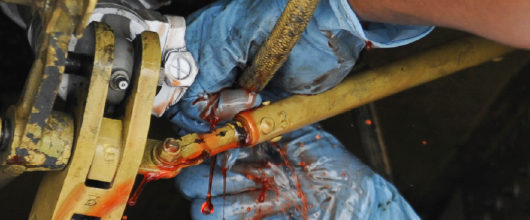
The best conversion starts with the application
A hydraulic-to-electric actuator conversion should start with what the machine is doing today and what the customer wants to improve. Force, stroke, speed, duty cycle, controls, environment, and mounting all need to be reviewed before choosing an electric actuator.
What to Review Before Replacing a Hydraulic Cylinder
A successful conversion depends on understanding the existing hydraulic system and the motion required by the machine. Simply matching bore size and stroke is not enough. The actuator must be sized around the actual work being done.
Scott Equipment Company helps customers collect and review the information needed to evaluate a hydraulic replacement. That information may come from machine drawings, cylinder data, operating pressure, cycle information, maintenance history, production goals, or direct application review.
Scott Equipment’s Role
We help customers organize the application details before working through actuator selection.
That can include gathering cylinder size, stroke, load, speed, pressure, duty cycle, orientation, mounting, environmental conditions, and control requirements.
Force Requirements
The conversion starts with understanding how much force the application actually requires. This may involve reviewing working pressure, cylinder area, load conditions, and the real work being done.
Stroke Length
Stroke length affects actuator selection, machine fit, mounting, and overall system design. Existing hydraulic cylinder stroke is an important starting point, but it is not the only requirement.
Speed and Motion Profile
Electric actuators need to be sized for the required move profile. Acceleration, deceleration, extend speed, retract speed, dwell time, and cycle time all matter.
Duty Cycle
High-cycle applications require careful review. Duty cycle affects actuator life, screw selection, motor sizing, heat, and overall system reliability.
Mounting and Space
Electric actuators may not fit exactly like the hydraulic cylinder they replace. Mounting style, rod alignment, available space, and machine structure should be reviewed early.
Load Direction and Side Loading
Electric actuators are designed to handle axial loads. Side loading, misalignment, and unsupported loads may require guides, linkage changes, or additional mechanical support.
Control Requirements
The control system may need to manage position, speed, force, acceleration, and feedback. This should be reviewed with the machine’s PLC, drives, sensors, and operator interface in mind.
Operating Environment
Dust, washdown, temperature, impact, contamination, and production conditions all affect actuator selection. Environmental protection should be considered before the actuator is specified.
The goal is not just to replace a cylinder
The goal is to improve how the machine performs. A good conversion considers force, motion, control, mounting, maintenance, and the production problem the customer is trying to solve.
Electric Actuator Options for Hydraulic Replacement
Electric actuators are not all the same. The right solution depends on the force, speed, stroke, accuracy, environment, and duty cycle required by the application. Some applications may need a ball screw actuator. Others may require a roller screw actuator for higher force or demanding cycle requirements.
Scott Equipment Company works with Tolomatic to help customers evaluate Tolomatic actuators and motion control solutions for hydraulic replacement, high-force motion, positioning, pressing, clamping, forming, lifting, and other demanding applications.
Scott Equipment’s Role
We help customers compare actuator technologies based on the application, not just the part number.
That can include reviewing ball screw, roller screw, high-thrust construction, environmental protection, feedback, motor selection, and controls needs.
Rod-Style Electric Actuators
Rod-style electric actuators are often reviewed for hydraulic replacement because their motion format is similar to a cylinder. They can be a strong fit for pushing, pulling, pressing, lifting, and positioning applications.
Ball Screw Actuators
Ball screw actuators can provide efficient and accurate linear motion. They are often reviewed when the application requires controlled positioning and moderate-to-high force.
Roller Screw Actuators
Roller screw actuators are often used for high-force, high-duty, or demanding motion applications. They can be a strong option when hydraulic replacement requires durability and long service life.
High-Thrust Applications
Some applications require significant force. High-force electric actuators should be reviewed carefully to make sure thrust, speed, life, and mounting requirements are all aligned.
Servo-Controlled Motion
Electric actuator systems can use servo control to manage position, speed, acceleration, and force. This can support more flexible machine operation than traditional hydraulic extend-and-retract motion.
Feedback and Visibility
Electric systems can provide useful feedback for machine control, process monitoring, and troubleshooting. This can help maintenance and engineering teams better understand machine behavior.
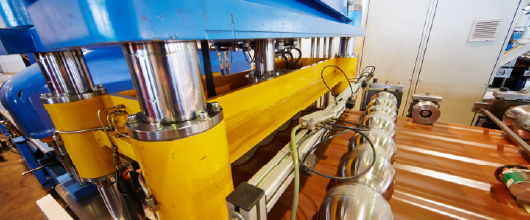
Electric actuator selection is a system decision
The actuator is only one part of the conversion. Motor, drive, controls, feedback, mounting, cabling, guarding, and operator requirements may all affect the final solution.
Beyond the Actuator: Controls, Feedback, Wiring, and Machine Support
A hydraulic-to-electric conversion often involves more than replacing one cylinder with one actuator. Electric actuators may require drives, motors, cables, feedback devices, mounting hardware, guarding considerations, and updates to the control system.
This is where early planning matters. The mechanical, electrical, and controls requirements should be reviewed together. Resources like control boxes and electrical components for automation projects can help customers think beyond the actuator itself.
Scott Equipment’s Role
We help customers look at the full machine package surrounding the actuator.
That can include controls, electrical components, sensing, mechanical mounting, guarding, cable routing, maintenance access, and value-added assembly support.
Motors and Drives
Electric actuators need to be paired with the right motor and drive. Motor sizing, control type, communication, and available power should be reviewed with the machine requirements.
PLC and HMI Controls
The machine control system may need to manage position, speed, force, recipes, alarms, or operator inputs. Controls requirements should be discussed early in the conversion process.
Feedback Devices
Position feedback can help support repeatable motion, troubleshooting, and process visibility. Feedback requirements may depend on how the machine uses the actuator.
Mounting Hardware
Electric actuators may require new brackets, adapters, or mechanical changes. Proper alignment and mounting help protect actuator life and performance.
Cable Management
Electric motion introduces cables that need to be routed, protected, and serviced. Cable entry and organization products can help support cleaner installation and easier maintenance access.
Machine Safety
Changes to motion, force, speed, or controls can affect machine safety. Review automation safety solutions for machine applications early in the project.
Control Panel Components
Some conversions may require enclosures, disconnects, relays, power supplies, or operator devices. Products such as Baco Controls products for industrial control panels may fit into the broader machine package.
Installation Planning
A conversion may need to fit into a planned shutdown or maintenance window. Pre-built kits, labeled components, and organized documentation can help simplify installation.
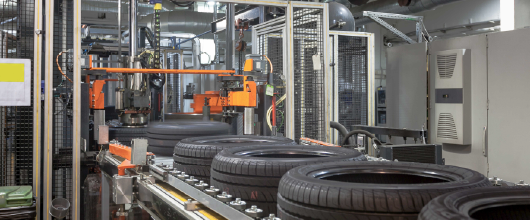
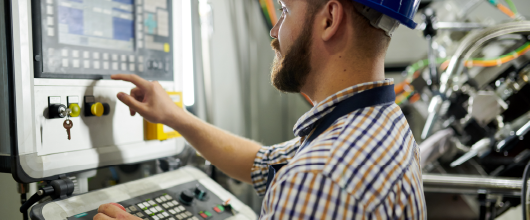
The supporting components can determine how smooth the conversion goes
A well-planned electric actuator conversion reviews the actuator, controls, mounting, feedback, cable routing, safety, and installation process before the equipment is ordered.
Technology Partners Supporting Hydraulic to Electric Actuator Conversion
Hydraulic-to-electric actuator conversion often involves more than selecting the actuator. The complete system may include motors, drives, controls, I/O, cables, power distribution, cable entry, cable protection, and machine safety components.
Scott Equipment Company works with technology partners that support different parts of the conversion. Tolomatic is the primary actuator partner for high-force electric linear motion, while supporting vendors help complete the system around the actuator.
Scott Equipment’s Role
We help customers review the complete actuator conversion package instead of treating each component separately.
That can include actuator selection, motor requirements, PLC and HMI needs, field wiring, power distribution, cable management, safety devices, and vendor coordination.

Tolomatic
Tolomatic is Scott Equipment Company’s key partner for electric linear motion and hydraulic replacement applications. Their actuator portfolio supports cleaner operation, controlled motion, improved repeatability, and high-force performance.

JVL
JVL supports actuator conversion projects with integrated servo and stepper motor technologies. Integrated motor designs can help simplify machine layouts by combining motor, drive, feedback, and communication capabilities.

TechTop
TechTop supports industrial motor applications where reliable electric motor performance is required. Learn more about TechTop industrial motors and DOE labeling standards.

Unitronics
Unitronics provides PLC and HMI solutions that can support machine control, operator interface, recipes, alarms, and automation logic for actuator conversion projects.

Murrelektronik
Murrelektronik supports cables, fieldbus products, IO-Link solutions, power distribution, and decentralized automation components, including Murrelektronik IMPACT67 Pro fieldbus modules.

Murrplastik
Murrplastik supports cable entry, cable organization, conduit, strain relief, and cable protection. Review Murrplastik cable entry solutions for industrial automation.

Euchner
Euchner supports machine safety applications with safety switches, guard locking devices, access control, and safety-related products used around guarded machine areas.

Schmersal
Schmersal supports machine safety with safety switching, monitoring, signal processing, and system-level safety products for guarded equipment and operator access areas.
The actuator is only one part of the conversion
A hydraulic-to-electric actuator conversion may involve motion, controls, wiring, power, cable management, and safety. Scott Equipment Company helps customers coordinate the supporting technologies so the conversion can be reviewed as a complete system.
We Build It, You Install It for Actuator Conversion Projects
A hydraulic-to-electric conversion may require more than an actuator shipment. Customers may need mounting plates, brackets, control panels, cables, sensors, connectors, fittings, or organized kits that help simplify installation.
Scott Equipment Company’s We Build It, You Install It approach can support customers who want a more organized path from product selection to installation. Depending on the project, Scott Equipment Company may be able to help prepare assemblies, kits, or supporting components that reduce field work.
Scott Equipment’s Role
We help customers identify where value-added assembly support can reduce installation time and improve consistency.
That can include actuator kits, mounting hardware, labeled components, panel support, cable organization, or repeatable assemblies for multiple machines.
Pre-Organized Actuator Kits
Kits can help group the actuator, mounting hardware, sensors, cables, and related components needed for installation.
Brackets and Mounting Support
Some conversions may require adapter plates or mounting changes. Reviewing this early can help avoid installation delays.
Controls and Panel Support
Where appropriate, Scott Equipment Company can help support control panel components or electrical assemblies that fit the actuator system.
Repeatable Machine Upgrades
For customers converting multiple machines, a repeatable kit or assembly can help standardize installation and reduce variation.
Maintenance-Friendly Layouts
Well-organized components, labels, and connection points can help maintenance teams troubleshoot and service the equipment more easily.
Vendor Coordination
Scott Equipment Company can help coordinate Tolomatic and other supporting vendors so the customer does not have to manage every product category separately.
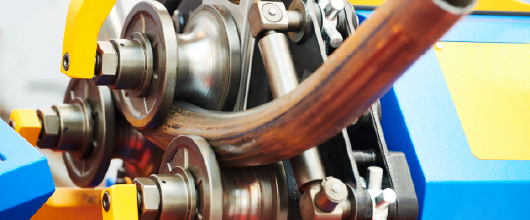
A conversion project should be easier to install, not harder
When the actuator, supporting components, and installation plan are reviewed together, customers can reduce surprises and support a cleaner transition from hydraulic to electric motion.
Backed by a Team Approach
Hydraulic-to-electric actuator conversion can involve mechanical, electrical, controls, maintenance, and production considerations. That is why Scott Equipment Company approaches these projects with a team mindset.
Your local Scott Equipment Company Account Manager can help start the conversation and gather application details. Our Technical Team can help review the motion requirements, coordinate with Tolomatic, and identify supporting components that may affect the conversion.
Scott Equipment’s Role
We act as a local support partner between the customer, the application, and the manufacturer.
That means helping gather information, asking practical questions, coordinating vendor input, and supporting product selection and implementation planning.
Local Account Manager Support
Scott Equipment Company’s Account Managers help customers start the application review and connect with the right internal and vendor resources.
Technical Team Support
Our Technical Team can help review motion requirements, actuator options, controls needs, and supporting components.
Vendor Coordination
We work with Tolomatic and supporting manufacturers to help align the product recommendation with the application.
Application-First Review
We focus on the machine function, production goal, and maintenance challenge before recommending a solution.
Support for New Builds and Retrofits
Scott Equipment Company can support OEMs, machine builders, integrators, and end users with new machine designs or retrofit projects.
Practical Next Steps
Our goal is to help customers identify a realistic path forward, whether that is a deeper review, product comparison, sizing support, or value-added assembly discussion.

You do not have to evaluate the conversion alone
Scott Equipment Company helps bring together the customer’s machine knowledge, our local support team, and manufacturer expertise so the conversion can be reviewed with the right details in place.
Problems That Often Start the Conversion Conversation
Customers usually begin reviewing hydraulic replacement because something in the current system is creating a production, maintenance, or quality issue. The problem may be hydraulic leaks, poor repeatability, frequent cylinder replacement, hard-to-control motion, or limited visibility into the process.
A hydraulic-to-electric actuator conversion will not solve every problem in every application. However, it can be a practical path when the customer needs cleaner operation, better control, programmable motion, or reduced hydraulic maintenance.
Scott Equipment’s Role
We help customers review the challenge before assuming the answer.
Leaks, inconsistent motion, limited position control, and frequent maintenance can all point to different review questions.
Hydraulic Leaks
Leaks can create housekeeping issues, contamination concerns, and added maintenance. Electric actuators can help remove fluid from the motion point in suitable applications.
Inconsistent Motion
Hydraulic motion can be affected by pressure, temperature, valve behavior, and system condition. Electric actuators can provide more controlled and repeatable motion.
Frequent Maintenance
Hoses, seals, fittings, filters, and fluid management can add maintenance time. Electric systems may reduce some of those service requirements.
Limited Position Control
Some hydraulic systems are designed for basic extend-and-retract motion. Electric actuators can support multiple positions and programmable moves.
Process Variation
In forming, pressing, clamping, or assembly applications, inconsistent force or position can affect part quality. Electric actuators can help improve repeatability when properly applied.
Hard-to-Capture Data
Electric systems can make it easier to collect useful motion and process information for troubleshooting, diagnostics, and process improvement.

The challenge usually points to the right review questions
Leaks, maintenance, poor repeatability, limited control, and process variation are not just problems. They are clues that help define what the replacement actuator system needs to accomplish.
Learn More About Electric Motion, Controls, Safety, and Cable Management
Hydraulic-to-electric actuator conversion can involve several parts of the machine. These Scott Equipment Company resources can help support the conversation.
Tolomatic Motion Control
Review Tolomatic actuators and motion control solutions available through Scott Equipment Company.
Switch to Electric Actuators
Learn how to switch to electric actuators to reduce noise, leaks, and energy use.
Hygienic Stainless Steel Actuators
Explore Tolomatic hygienic stainless steel actuators for clean, washdown, or sanitary automation environments.
Automation Safety
Review automation safety solutions for machine applications when motion, access, or guarding changes.
Control Boxes
Learn more about control boxes and electrical components for automation projects.
Cable Entry Solutions
Review Murrplastik cable entry solutions for industrial automation.

Common Questions About Hydraulic to Electric Actuator Conversion
Hydraulic-to-electric actuator conversion involves more than replacing one component. Customers often need to review force, stroke, speed, duty cycle, controls, mounting, environment, and long-term maintenance goals.
Can an electric actuator replace a hydraulic cylinder?
Yes, in many applications an electric actuator can replace a hydraulic cylinder. The application must be reviewed carefully to confirm force, stroke, speed, duty cycle, mounting, controls, and environmental requirements.
When does it make sense to convert from hydraulic to electric?
A conversion may make sense when the customer wants cleaner operation, better position control, improved repeatability, less hydraulic maintenance, reduced leak risk, or better machine data.
Are electric actuators strong enough to replace hydraulics?
Electric actuators can support many high-force applications, especially when the right actuator technology is selected. Ball screw and roller screw actuator options should be reviewed based on force, speed, duty cycle, and life requirements.
What information is needed to size an electric actuator?
Important details include force, stroke, speed, cycle time, duty cycle, load direction, mounting style, environment, control requirements, and available space. Existing hydraulic pressure and cylinder dimensions can also help, but they may not tell the full story.
Is an electric actuator conversion always less expensive?
Not always upfront. Electric actuator systems may cost more initially, but they can reduce maintenance, improve control, reduce hydraulic-related issues, and support lower total cost of ownership in the right application.
Will converting to electric require controls changes?
Often, yes. Electric actuators typically require a motor, drive, feedback, and machine control integration. The level of controls work depends on the application and the existing machine.
Can Scott Equipment Company help with actuator sizing?
Scott Equipment Company can help gather application details, review requirements, and coordinate with Tolomatic to support actuator sizing and selection.
Can Scott Equipment Company provide a complete conversion kit?
Depending on the application, Scott Equipment Company may be able to support actuator kits, mounting components, controls-related components, or value-added assemblies through our We Build It, You Install It approach.
Should safety be reviewed during a hydraulic-to-electric conversion?
Yes. Changes to motion, speed, force, controls, or access can affect machine safety. Final safety design, risk assessment, and validation should be handled by qualified safety professionals.
Who should I contact to review a hydraulic actuator application?
Contact your local Scott Equipment Company Account Manager or our Technical Team. We can help review the application, gather the right information, and identify practical next steps.
Let’s Review Your Hydraulic Actuator Application
If your team is dealing with hydraulic leaks, maintenance issues, inconsistent motion, limited position control, or a need for cleaner machine design, Scott Equipment Company can help you review whether electric actuator conversion makes sense.
Scott Equipment Company provides trusted automation solutions and application support for manufacturers throughout North and South Carolina.
Trusted Automation Solutions for the Carolinas Since 1977.