
Precision Motion for Long-Stroke Automation
Space-saving electric rodless actuator support for material handling, packaging, assembly, transfer, and multi-axis motion applications.
Tolomatic electric rodless linear actuators move the load along the actuator body instead of extending a rod. Scott Equipment Company helps customers review the load, stroke, speed, bearing system, drive type, motor, controls, and machine layout before selecting a rodless actuator solution.
Start With the Motion Path
Review the actuator style, drive mechanism, bearing system, application requirements, and support options before selecting a rodless actuator.
What Is an Electric Rodless Linear Actuator?
An electric rodless linear actuator moves a carriage or carrier along the length of the actuator body. The actuator stays fixed while the load travels back and forth across the machine.
Because there is no extending rod, a rodless actuator can support longer stroke lengths and a more compact machine layout. This makes it useful for transfer systems, packaging equipment, gantry motion, machine loading, and other long-travel automation applications.
Scott Equipment’s Role
Scott Equipment Company helps customers compare rodless actuators, rod-style actuators, pneumatic cylinders, and other motion options based on the actual machine requirement.
Our team can help review load, stroke, speed, guidance, motor requirements, controls, and related components before a Tolomatic rodless actuator is selected.
Long Stroke Lengths
Rodless actuators can move loads across longer travel distances without needing rod clearance beyond the actuator body.
Compact Machine Layout
The motion path stays within the actuator length, which can help when floor space, frame space, or machine clearance is limited.
Guided Load Movement
Depending on the bearing system, the actuator can help support the moving load and handle forces created during motion.
Electric Motion Control
Electric rodless actuators can support controlled position, speed, acceleration, and repeatable motion profiles.
A Rodless Actuator Solves a Different Problem Than a Rod-Style Actuator
Rod-style actuators are often selected for cylinder-style push and pull motion. Rodless actuators are often selected when the load must travel along a longer path, when clearance is limited, or when the actuator will support a transfer, gantry, or material-handling axis.
Key Benefits of Tolomatic Electric Rodless Actuators
Tolomatic electric rodless actuators are designed for industrial applications where stroke length, speed, load support, repeatability, and machine layout all matter.
The right actuator depends on more than travel distance. Drive style, bearing support, speed, load, moment forces, motor selection, and controls must all work together.
Backed by a Team Approach
Your local Scott Equipment Account Manager can help gather application information and coordinate support from our Technical Team and Tolomatic resources.
That approach helps connect the actuator to the complete motion system instead of treating it as a stand-alone component.
Space-Saving Design
A rodless actuator can provide long travel without requiring extra space for an extending rod.
High-Speed Travel
Belt-driven rodless actuators can support fast point-to-point motion for high-throughput automation.
Precise Positioning
Screw-driven rodless actuators can support more controlled positioning when accuracy and repeatability are priorities.
Flexible Load Support
Different bearing and guide options help match the actuator to the load, moment forces, and environment.
Lower Fluid-Power Maintenance
Electric rodless actuators can reduce concerns tied to compressed air demand, air leaks, and hydraulic fluid at the motion axis.
Multi-Axis Potential
Rodless actuators can be used in gantry systems, auxiliary axes, and transfer applications where coordinated motion is needed.
Screw-Driven vs. Belt-Driven Rodless Actuators
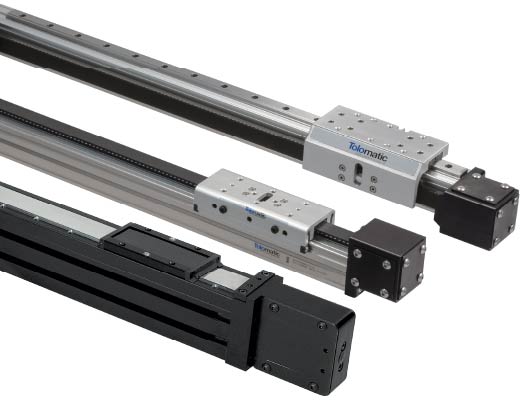
Tolomatic electric rodless actuators are available in screw-driven and belt-driven designs. Each drive style supports a different type of motion requirement.
The best choice depends on speed, stroke length, thrust, positioning accuracy, load, duty cycle, and how the actuator will be mounted in the machine.
Scott Equipment’s Role
Scott Equipment Company can help compare speed, thrust, stroke, positioning, and load requirements before narrowing the product family.
This helps avoid selecting a belt drive when controlled thrust is the priority or selecting a screw drive when long, fast travel is the main requirement.
Screw-Driven Rodless Actuators
Screw-driven actuators are generally used when the application needs controlled positioning, repeatable motion, or higher thrust.
They may be a good fit for:
• Inspection equipment
• Precision assembly
• Dispensing
• Test systems
• Controlled positioning
• Moderate-speed motion
Belt-Driven Rodless Actuators
Belt-driven actuators are generally used when the application needs high speed, longer travel, or fast point-to-point movement.
They may be a good fit for:
• Packaging lines
• Material handling
• Conveyor systems
• Gantry axes
• Machine loading
• Pick-and-place motion
Quick Drive Selection Guide
Drive Style Should Follow the Motion Profile
The actuator should be selected around the move distance, required speed, thrust, accuracy, cycle rate, and load support. A long-stroke transfer axis and a controlled inspection axis may both use rodless actuators, but they may require different drive styles.
Bearing and Guide System Options
The bearing system is one of the most important decisions in a rodless actuator application. It helps support the load and manage the forces created as the carriage moves.
The right bearing choice depends on load weight, moment forces, accuracy, contamination, and whether the machine already has external guidance.
Scott Equipment’s Role
Scott Equipment Company can help review whether the actuator needs to support the load or whether the machine already includes external guides.
This review helps determine whether a profiled rail, solid bearing, or unguided actuator should be considered.
Profiled Rail Bearings
Profiled rail systems provide higher rigidity and strong load support. They are often used when the application has heavier loads, bending moments, or accuracy requirements.
Common uses include gantry axes, heavy load transfer, machine loading, robotic support axes, and precision material handling.
Solid Bearing Systems
Solid bearing systems can provide a durable and cost-effective option for light-to-moderate load applications.
They may be useful in general automation, packaging, material transfer, and environments where dust or dirt is present.
Unguided Actuators
Unguided rodless actuators are used when the load is already supported by an external linear guide system.
In this layout, the actuator provides drive force while the machine structure handles load support and moments.
Where Electric Rodless Actuators Fit
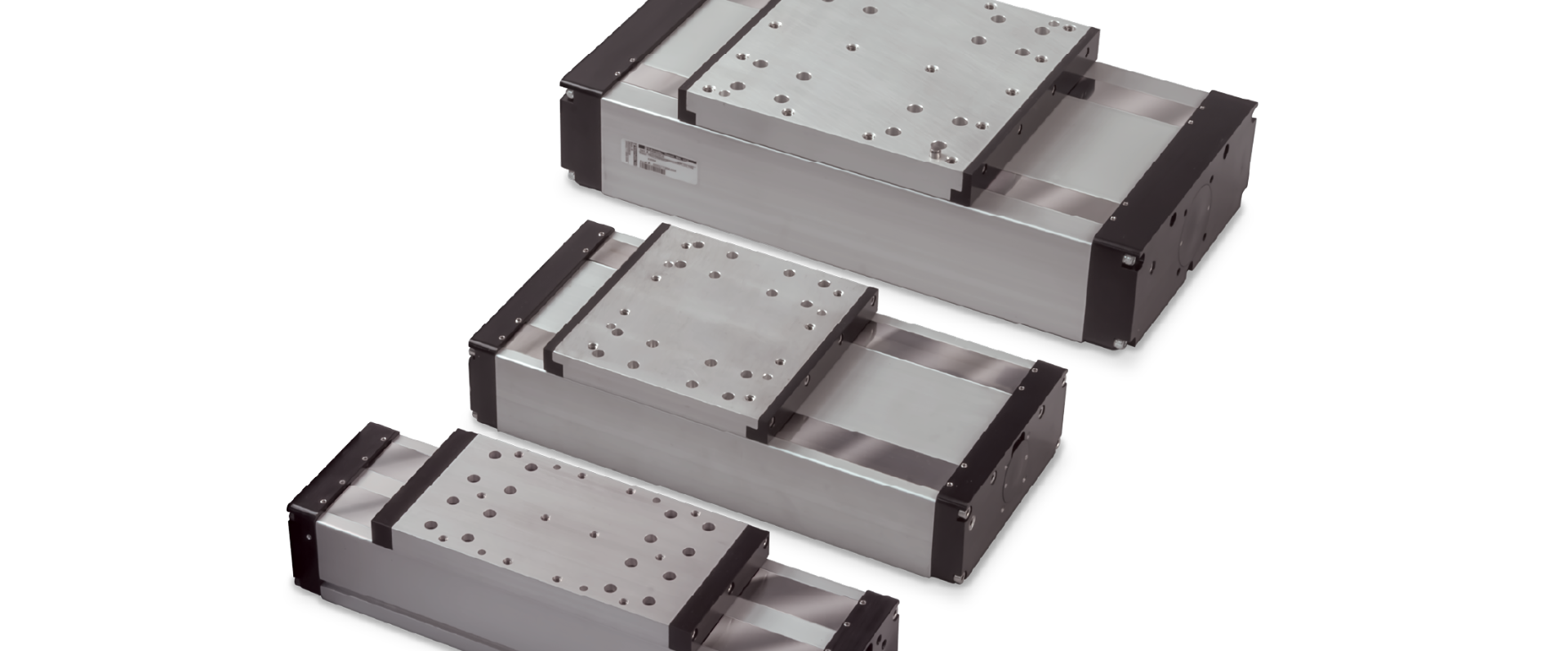
Tolomatic electric rodless actuators can support applications where long travel, high-speed movement, guided load support, and repeatable positioning are needed.
They are often used in packaging, material handling, assembly automation, robotic workcell support, tire and rubber, and life science automation.
Start With the Work Being Done
Similar rodless actuators may perform very different jobs depending on the load, speed, stroke, orientation, and surrounding machine design.
Scott Equipment can help review the actual machine task before narrowing the product family.
Material Handling
Move products, pallets, trays, fixtures, tooling, and assemblies across a machine or production line.
Packaging Equipment
Support high-speed product indexing, pusher systems, diverters, labeling support, sealing support, and carton or case handling.
Assembly Automation
Move parts, fixtures, tools, or inspection devices between workstations with controlled, repeatable travel.
Robotic Workcell Support
Support part presentation, auxiliary axes, tooling movement, inspection stations, and load/unload equipment. Explore Scott Equipment’s robotic automation solutions.
Tire and Rubber
Support transfer, positioning, inspection, handling, conveyor support, and process automation in demanding production environments.
Medical and Life Science
Support sample handling, tray movement, automated inspection, diagnostic equipment, and precision positioning.
Electric Rodless Actuator Product Families
Tolomatic offers multiple electric rodless actuator families. The right selection depends on speed, load, stroke, bearing support, accuracy, duty cycle, environment, and motor requirements.
Scott Equipment Company can help review which product family should be considered before sizing and configuration are finalized.
Product Selection Support
The product family should match the machine’s motion profile, not just the stroke length.
Our team can help compare MXB, MXE, B3S, B3W, and related Tolomatic rodless actuator options.
MXB Series
Belt-driven rodless actuators for high-speed, long-stroke, point-to-point motion in packaging, transfer, and material-handling applications.
MXE Series
Screw-driven rodless actuators for controlled positioning, higher thrust, inspection, assembly, and repeatable motion applications.
B3S Series
Ball screw rodless actuators for precision positioning, controlled motion, testing, robotic support axes, and assembly equipment.
B3W Series
Belt-driven rodless actuators for long-stroke transfer, material handling, pick-and-place, packaging, and fast travel applications.
Rodless vs. Rod-Style
If the application requires cylinder-style push/pull motion, review Tolomatic electric rod-style actuators.
Servo Integration
If the application needs a compact motor and actuator package, review Tolomatic integrated servo linear actuators.
Information Needed to Select a Rodless Actuator
Rodless actuator selection should not be based on stroke length alone. The drive style, bearing system, load, moment forces, speed, and motor all need to match the application.
If you do not have every detail, Scott Equipment Company can help identify what information is needed next.
Send Us What You Have
Photos, drawings, current part numbers, machine layouts, and basic motion requirements are all useful starting points.
Our team can help determine which details need to be confirmed before product selection.
Considering a Pneumatic or Hydraulic Replacement?
Electric rodless actuators may be worth reviewing when an existing pneumatic rodless cylinder does not provide enough control, repeatability, or feedback. For broader fluid-power conversion support, visit Scott Equipment’s hydraulic to electric actuator conversion page.
Tools That Help With Rodless Actuator Selection
Tolomatic provides tools and resources that help engineers size, configure, and integrate electric rodless actuators.
These tools are most effective when the application data is accurate. Scott Equipment can help customers gather and review that information before final selection.
Technical Coordination
The actuator, motor, drive, feedback, controls, and cable routing need to work together.
Scott Equipment can help coordinate the application details and Tolomatic resources needed for the review.
SizeIt Actuator Sizing Software
SizeIt helps evaluate actuator options based on load, speed, stroke, duty cycle, and other application requirements.
Watch the Tolomatic sizing software videoCAD Models and Product Resources
CAD models, manuals, brochures, and product data help engineers confirm actuator fit, mounting, and system layout.
Your Motor Here
Tolomatic’s motor-mounting support can help match standard motor options to compatible actuator arrangements.
Drive and Controls Review
The actuator, motor, drive, feedback, control platform, and cable routing should be reviewed together before the actuator is ordered.
Rodless Actuators Are Often Part of a Larger System
A rodless actuator project may require more than the actuator itself. The complete solution may include mounting hardware, guides, motors, drives, sensors, cables, safety devices, control panels, and documentation.
Through Scott Equipment Company’s We Build It, You Install It program, we can help review whether the actuator and supporting components can be organized into a more complete solution.
Scott Equipment’s Role
Not every rodless actuator application requires a custom assembly.
When it does, Scott Equipment can help review kits, staged components, documentation, and repeatable installation support.
Mounting Hardware
Brackets, adapter plates, and mounting components help fit the actuator into the machine structure.
External Guides
Some rodless actuator systems require separate linear guides to support the load and handle moment forces.
Motors and Drives
Motor, drive, feedback, control platform, and cable routing should be reviewed as part of the complete axis.
Repeatable Kits
For repeated machine builds, a documented kit can simplify purchasing, staging, installation, and maintenance.
Build the Motion Axis Around the Complete Machine
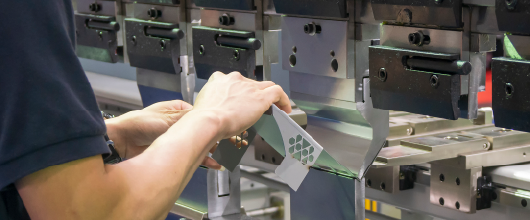
The selected rodless actuator should fit the mechanical design, load support, motor and drive package, cable routing, safety requirements, and maintenance plan. Scott Equipment Company can help connect those details before the solution is finalized.
Common Questions About Tolomatic Electric Rodless Actuators
These answers provide a practical starting point. Final actuator selection should be based on the actual load, stroke, speed, duty cycle, guidance, mounting, and control requirements.
What is an electric rodless linear actuator?
An electric rodless linear actuator moves a load along the actuator body using a carriage or carrier. It does not have an extending rod, which helps support longer strokes and compact machine layouts.
When should I choose a rodless actuator instead of a rod-style actuator?
A rodless actuator may be a better fit when the application needs a long stroke, high-speed travel, compact layout, or load movement along a track.
What is the difference between belt-driven and screw-driven rodless actuators?
Belt-driven rodless actuators are often used for high-speed and long-stroke applications. Screw-driven rodless actuators are often used when the application needs more precise positioning or controlled thrust.
What bearing system should I choose?
The bearing system depends on the load, moment forces, accuracy needs, and environment. Profiled rail systems provide higher rigidity. Solid bearing systems can provide a durable and cost-effective option. Unguided actuators are used when external guides support the load.
Can rodless actuators replace pneumatic rodless cylinders?
In some applications, yes. Electric rodless actuators may be a strong option when the machine needs better control, repeatability, feedback, or reduced compressed air demand.
What information is needed to size a Tolomatic rodless actuator?
Helpful information includes load, stroke, speed, acceleration, duty cycle, mounting orientation, required accuracy, external guidance, moment loads, environment, motor preference, and controls platform.
Can Scott Equipment help with motor, drive, and cable questions?
Yes. Scott Equipment can help review the actuator application, motor and drive requirements, control platform, cable routing, and available Tolomatic integration resources.
Can Scott Equipment help with the complete actuator installation?
Yes. Depending on the application, Scott Equipment can help review supporting components such as mounting hardware, brackets, external guides, cabling, sensors, safety devices, control panels, and repeatable kits through We Build It, You Install It.
Not Sure Which Rodless Actuator Fits?
Send Scott Equipment Company the load, stroke, speed, application description, photos, drawings, or current actuator information you have. Our team can help identify the next details needed for review.
Let’s Review the Motion Path Before the Actuator Is Selected
Whether you are building a new machine, replacing a pneumatic rodless cylinder, adding a transfer axis, or reviewing a packaging or material-handling application, Scott Equipment Company can help evaluate the application and work with Tolomatic to identify the right solution.
Scott Equipment Company provides trusted automation solutions and application support for manufacturers throughout North and South Carolina.
Trusted Automation Solutions for the Carolinas Since 1977.