
Control Impact. Reduce Vibration. Protect Equipment.
Application-focused support for industrial shock absorption, controlled deceleration, and vibration isolation.
Scott Equipment Company helps manufacturers, machine builders, maintenance teams, and plant engineers evaluate how industrial equipment moves, stops, and vibrates. Working with Enidine shock absorption and vibration-control products, we can help review the application, identify the appropriate product family, and support a solution that fits the equipment and operating environment.
Start With the Application
Explore the application factors, product categories, and support options that can help control impact and unwanted vibration.
Shock and Vibration Are Different Problems
Shock and vibration are often discussed together, but they describe different types of motion. Understanding the difference is an important first step toward selecting the right industrial shock absorption or vibration-control solution.
A shock absorber is typically used to control a sudden impact and bring a moving load to a stop. A vibration isolator is used to reduce repeated or oscillating motion transferred between equipment and its supporting structure.
Scott Equipment’s Role
Scott Equipment Company helps customers identify whether the application involves sudden impact, repeated vibration, uncontrolled motion, or a combination of conditions.
That distinction helps determine what application information should be gathered and which Enidine product category should be considered.
Shock and Impact
Shock is a sudden energy event. It may occur when a slide reaches the end of its travel, a conveyor carrier contacts a stop, an indexing mechanism changes position, or a moving load strikes another machine component.
Without controlled deceleration, the resulting force can be transferred into tooling, bearings, actuators, products, machine frames, and surrounding components.
Vibration
Vibration is repeated or oscillating movement. It may be generated by motors, pumps, fans, compressors, rotating equipment, reciprocating machinery, imbalanced loads, or repeated production cycles.
That movement can remain within the machine or travel through its frame, floor, foundation, guarding, piping, and connected equipment.
Common Impact Applications
• Linear slides and actuators
• Indexing equipment
• Conveyor carriers and stops
• Tooling and fixtures
• Material-handling systems
• Automated and robotic equipment
Common Vibration Sources
• Motors and gearboxes
• Pumps and compressors
• Fans and blowers
• Rotating shafts and tooling
• Reciprocating equipment
• Production machinery
Start by Identifying Where the Energy Is Going
A shock absorber and a vibration isolator do not solve the same problem. Proper selection begins by understanding how the equipment moves, where the unwanted energy originates, and where that energy is being transferred.
Start With the Complete Application
Physical dimensions matter, but a shock absorber should not be selected only because it fits the available space or shares the same thread size as an existing product.
The right solution depends on how much energy must be controlled, how frequently the impact occurs, how the load is driven, and how much stopping distance is available. Changes in machine speed, payload, tooling, or cycle rate can also affect what the application requires.
Scott Equipment’s Role
Scott Equipment Company can help gather the operating information needed to begin sizing and selection.
Our team can review the application, coordinate available Enidine sizing resources, and help identify which product family should be considered before detailed selection begins.
Moving Load
Determine the moving weight or effective mass, including tooling, fixtures, product, carriers, and any other components that move with the load.
Speed and Drive Force
Review the impact velocity and the force continuing to drive the load. Pneumatic cylinders, electric actuators, gravity, motors, and other mechanisms can affect the total energy.
Cycle Rate
Identify how often the impact occurs. A product may have enough capacity for one stop but still be unsuitable for the energy generated during repeated operation.
Stroke and Stopping Distance
Confirm the available deceleration distance. More stopping distance can reduce peak forces, but the product must fit the machine and provide the required stroke.
Mounting and Alignment
Review available space, mounting orientation, alignment, structural support, and whether side loading or other installation conditions must be addressed.
Operating Environment
Consider temperature, moisture, washdown, dust, oil, chemicals, corrosion, and other environmental conditions that may affect product selection and service life.
Shock Absorber Application Information
• Moving weight or effective mass
• Impact velocity
• Drive or propelling force
• Cycles per hour
• Available stroke
• Mounting orientation
• Temperature and environmental exposure
• Available installation space
Vibration Application Information
• Total equipment weight
• Weight at each mounting point
• Source and direction of vibration
• Operating or disturbing frequency
• Number and location of mounts
• Available isolator deflection
• Environmental conditions
• Acceptable equipment movement
The Goal Is More Than Finding a Product That Fits
The objective is to identify a solution that is appropriate for the way the machine actually operates. Send Scott Equipment Company the information you have—including a current part number, photos, drawings, or an application description—and our team can help identify what additional details are needed.
Warning Signs Your Application May Need Attention
Shock and vibration problems are not always identified during the original machine design. They may become more noticeable as equipment ages, production requirements change, or components begin to wear.
Recognizing the symptoms can help maintenance and engineering teams determine when it is time to review the motion, stopping method, mounting arrangement, or vibration path.
Scott Equipment’s Role
Scott Equipment Company can help review the symptoms, current components, machine changes, and operating conditions.
The goal is to understand the source of the problem before recommending an Enidine shock absorber, rate control, vibration isolator, or supporting component.
Hard End-of-Travel Impact
A slide, actuator, carriage, fixture, or moving load reaches the end of travel with a hard mechanical impact that transfers force into surrounding components.
Bouncing or Rebound
The moving load contacts the stop and then moves backward, oscillates, or requires additional time to settle before the next operation can begin.
Excessive Noise
Repeated banging, rattling, humming, or structure-borne noise may indicate uncontrolled impact, vibration transmission, or loose machine components.
Premature Component Wear
Bearings, cylinders, slides, brackets, tooling, fasteners, or machine structures require maintenance or replacement more frequently than expected.
Loose Hardware
Bolts, fittings, guards, sensors, electrical connections, and mounting brackets repeatedly loosen because of impact or vibration.
Damaged Bumpers or Stops
Rubber bumpers, fixed stops, springs, or improvised cushioning components deform, crack, or fail under repeated impact.
Inconsistent Machine Operation
Uncontrolled motion affects product positioning, sensor readings, inspection results, repeatability, settling time, or overall cycle performance.
Sensitive Equipment Problems
Cameras, sensors, electronics, inspection devices, and test equipment are affected by vibration from the machine or surrounding facility.
Symptoms Point to a Problem—Not Automatically to a Product
These warning signs do not automatically identify the correct solution. They do indicate that the motion, impact, mounting, or vibration conditions should be reviewed before another bumper, shock absorber, or isolation mount is installed.
Bring Moving Loads to a Controlled Stop
A fixed stop may halt movement, but it does not necessarily manage the resulting impact force. Springs and rubber bumpers may store some of the energy and return it to the moving load, creating rebound or continued movement.
Industrial shock absorbers are designed to decelerate moving loads in a controlled and predictable manner. By managing the energy over the available stroke, they can help reduce peak forces and limit the amount of shock transferred into the machine.
Scott Equipment’s Role
Scott Equipment Company can help review the moving load, impact speed, drive force, cycle rate, available stroke, mounting arrangement, and operating environment.
That information helps narrow the Enidine product family before detailed sizing and selection are completed.
Reduce Peak Impact Forces
Controlled deceleration spreads the stopping event over the shock absorber stroke instead of concentrating the force into a hard mechanical stop.
Minimize Bounce and Rebound
Properly selected shock absorbers can reduce the energy returned to the load, helping the mechanism settle more quickly and consistently.
Protect Tooling and Components
Reducing transmitted impact can help protect bearings, actuators, slides, fixtures, tooling, products, sensors, and machine structures.
Support Consistent Operation
A controlled stop can help improve settling time, repeatability, noise levels, and the consistency of repeated machine cycles.
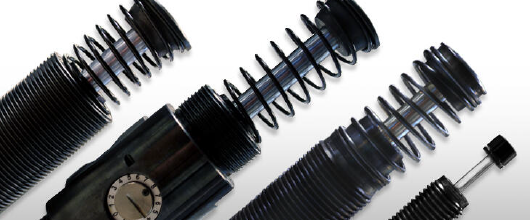
Adjustable Shock Absorbers
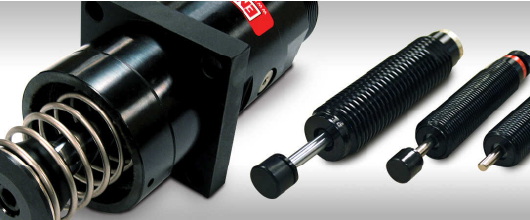
Adjustable shock absorbers allow the deceleration response to be tuned after installation.
They may be considered when:
• Payloads or operating speeds vary
• Final conditions are not fully defined
• A prototype machine is being developed
• One mechanism operates under multiple conditions
• The stopping response must be tuned in the field
Non-Adjustable Shock Absorbers
Non-adjustable shock absorbers provide a defined deceleration response without requiring field adjustment.
They may be appropriate for:
• Repeating machine designs
• Consistent loads and speeds
• Standard OEM platforms
• High-cycle production equipment
• Applications being standardized across machines
Small- and Mid-Bore Shock Absorbers
Compact and mid-size products are commonly used on automated machinery where repetitive motion must be stopped within limited space.
Typical applications include slides, guided actuators, pick-and-place equipment, indexing mechanisms, packaging machines, assembly equipment, and conveyor systems.
Large-Bore Shock Absorbers
Larger products are used when the application involves higher energy, heavier loads, increased speed, or more demanding operating conditions.
These applications require careful review of the complete operating conditions, mounting arrangement, supporting structure, and available stopping distance.
Environmental Conditions Matter
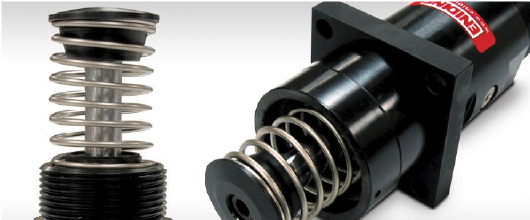
Moisture, washdown, corrosive chemicals, temperature, dust, and contamination can affect product selection and service life. For demanding environments, learn more about Enidine CRS shock absorbers for corrosive and washdown applications.
Size and Thread Alone Do Not Confirm the Right Shock Absorber
Energy per cycle, moving weight, impact speed, drive force, stroke, cycle frequency, mounting, and environmental exposure all influence selection. Scott Equipment Company can help review the complete application before an Enidine product is specified.
Control Larger Loads and Higher-Energy Impacts
Compact machine shock absorbers are well suited for many automation applications, but some equipment generates significantly more energy.
Heavy-duty applications may involve larger moving masses, higher impact speeds, longer stopping distances, demanding duty cycles, or equipment operating in harsh industrial environments. These conditions require a more complete review of the deceleration system and supporting machine structure.
Scott Equipment’s Role
Scott Equipment Company can help gather the operating information needed for heavy-duty Enidine applications and identify when a more detailed technical review is required.
Our team can coordinate product information, application details, mounting considerations, and vendor resources without treating a high-energy stop as a simple physical replacement.
Automated Storage Systems
Decelerate large moving structures, retrieval equipment, and travel mechanisms as they approach operating limits or designated stop positions.
Cranes and Trolleys
Manage the energy created by bridge travel, trolley movement, and other high-mass industrial handling equipment.
Large Conveyor and Transfer Systems
Control larger carriers, shuttles, transfer equipment, and material-handling assemblies operating at higher speeds or with changing loads.
Rail-Mounted Equipment
Provide end-of-travel protection for mobile industrial equipment that moves along rails or guided tracks.
Heavy Material Handling
Reduce impact on systems moving larger products, fixtures, pallets, tooling, or industrial loads.
Industrial Doors and Gates
Control the movement of large doors, gates, panels, and access mechanisms as they reach open or closed positions.
Steel and Metal Processing
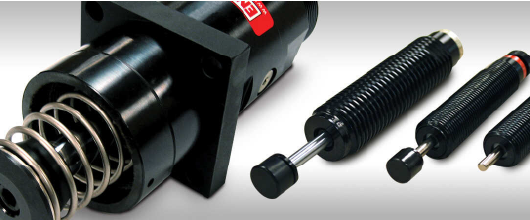
Support demanding equipment where large masses, harsh environments, and repeated production cycles create substantial stopping energy.
Emergency and Overtravel Stops
Review applications where the shock absorber is intended to manage an abnormal, emergency, or maximum-travel event rather than a routine production stop.
Heavy-Duty Application Review Factors
A Larger Shock Absorber Is Not Automatically the Right Answer
The goal is to develop a deceleration approach that fits the energy, equipment, supporting structure, mounting arrangement, and operating conditions. High-energy applications should be reviewed as a complete system.
Control Motion Without Immediately Stopping It
Not every application requires a moving load to stop at the end of a short shock absorber stroke. Some mechanisms need their speed controlled over a longer distance.
Hydraulic rate controls regulate how quickly a mechanism moves from one position to another. Depending on the product and mounting arrangement, they may control motion in compression, tension, or both directions.
Scott Equipment’s Role
Scott Equipment Company can help determine whether the application requires end-of-travel energy absorption or controlled movement over a longer distance.
Our team can review the direction of motion, required travel, load, speed, timing, mounting, and operating environment before an Enidine rate-control product is considered.
Industrial Shock Absorber
Generally used to decelerate and stop a moving load as it approaches a defined end position. The stopping event occurs over the available shock absorber stroke.
Hydraulic Rate Control
Used to regulate how quickly a mechanism moves over a longer portion of its travel. The objective is controlled speed rather than only absorbing energy at the end of motion.
Machine Doors and Panels
Regulate opening or closing motion to reduce sudden movement, uncontrolled travel, or hard contact at the end position.
Lids and Hinged Mechanisms
Control the movement of lids, covers, hatches, and hinged assemblies that need to open or close at a predictable rate.
Linear Slides
Manage the speed of a moving slide or carriage through a defined portion of travel rather than only cushioning the final stop.
Pneumatic-Cylinder Motion
Supplement pneumatic motion where the mechanism requires more controlled travel, timing, or resistance than the cylinder alone provides.
Feed Movements
Regulate the motion of material, tooling, fixtures, or machine components that must advance at a smoother and more predictable rate.
Extension and Retraction
Control motion in one or both directions where an assembly must extend, retract, lower, or return without sudden acceleration.
Material-Handling Equipment
Manage the travel of carts, gates, transfers, carriers, and handling mechanisms that require controlled movement between positions.
Linear or Rotational Loads
Support applications where a translating or rotating mechanism needs controlled resistance throughout part of its movement.
Rate-Control Application Review
First Decide Whether the Application Needs a Stop or Controlled Travel
A hydraulic rate control manages movement over a distance. An industrial shock absorber is generally intended to decelerate a moving load as it approaches a stop. Understanding that difference helps avoid selecting a product that fits physically but does not perform the required function.
Control Vibration Before It Travels Through the Machine
Vibration rarely stays confined to the component that creates it. Movement generated by a motor, pump, compressor, fan, press, or rotating assembly can travel through the machine frame and into the floor, foundation, guarding, piping, electrical enclosure, and surrounding equipment.
Vibration can also travel in the opposite direction. Sensitive equipment may be affected by movement originating from another machine, a nearby production process, or the building structure.
Scott Equipment’s Role
Scott Equipment Company can help review the equipment weight, mounting points, vibration source, direction of movement, operating frequency, environmental conditions, and acceptable equipment motion.
That information helps determine whether the application should focus on isolating the source, protecting sensitive equipment, damping unwanted motion, or combining multiple approaches.
Isolate the Source
Source isolation is intended to reduce the amount of vibration transferred from operating machinery into the supporting structure.
Typical equipment may include pumps, motors, compressors, fans, blowers, generators, production machinery, and test stands.
Protect Sensitive Equipment
In other applications, the goal is to prevent vibration from reaching equipment through the floor, frame, vehicle, or surrounding structure.
Examples include cameras, vision systems, sensors, instrumentation, electronics, controls, inspection equipment, and test systems.
Damp Unwanted Movement
Damping removes energy from a vibrating system and helps reduce continued movement, oscillation, or resonance.
Isolation and damping are related, but they are not identical. The right approach depends on the vibration source, supported weight, frequency, and mounting arrangement.
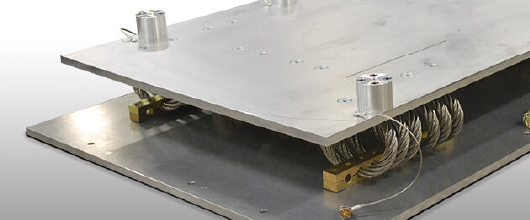
Wire-Rope Isolators
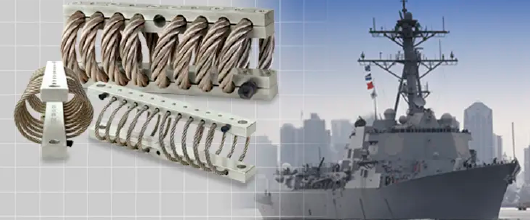
Formed metal cable elements provide shock and vibration protection for industrial machinery, mobile equipment, electronics, controls, and demanding environments.
Compact Wire-Rope Isolators
Compact configurations support smaller equipment, limited mounting space, and applications that still require multidirectional shock and vibration protection.
Circular Wire-Rope Isolators
Circular designs can provide a compact isolation option where equipment geometry or mounting requirements favor a centralized configuration.
Air Springs
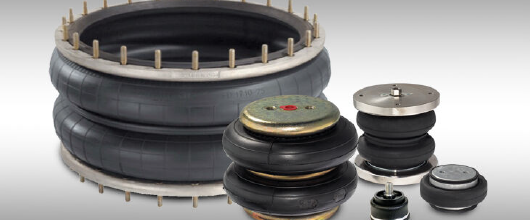
Air springs can provide vibration isolation, load support, and controlled movement for sensitive machinery, test equipment, industrial platforms, and changing loads.
Elastomeric Mounts
Elastomeric mounts, pads, and bushings may provide a compact solution when properly matched to the supported load, frequency, deflection, and environment.
Specialty Isolation Solutions
Some applications require a specialized approach based on equipment geometry, environmental exposure, mounting limitations, or combined shock and vibration conditions.
Vibration-Isolation Review Factors
The Softest Mount Is Not Automatically the Best Isolator
An isolation system must support the load while providing the right stiffness, deflection, damping, stability, and environmental resistance. Simply placing a soft pad under a machine does not guarantee effective vibration control.
Shock and Vibration Problems Across Industrial Equipment
Impact and vibration can affect nearly every type of automated or industrial equipment. The application may involve a compact slide reaching the end of travel, a large material-handling system stopping a heavy load, or sensitive equipment being affected by nearby vibration.
Scott Equipment Company supports new machine design, equipment upgrades, maintenance requirements, replacement applications, and recurring production problems throughout North and South Carolina.
Backed by a Team Approach
Your local Scott Equipment Account Manager can help identify the application and coordinate support from our Technical Team and Enidine resources.
That team approach helps connect the shock absorber or vibration isolator with the motion, sensing, pneumatic, electrical, safety, and mechanical components used throughout the machine.
Industrial Automation
Support slides, actuators, indexing systems, fixtures, tooling, sensors, and repetitive-motion equipment that must stop or settle consistently.
Material Handling
Control conveyors, carriers, pallets, shuttles, stops, carts, trolleys, transfer units, and overhead systems operating with repeated or changing loads.
Packaging and Assembly
Reduce impact and vibration on high-cycle machines that depend on repeatable motion, positioning, sensing, inspection, and product handling.
Tire and Rubber Manufacturing
Support material handling, transfer systems, presses, component positioning, processing equipment, and automated machinery in demanding production environments. Explore Scott Equipment’s tire and rubber automation solutions.
Automotive Manufacturing
Manage motion and vibration in assembly equipment, tooling, conveyors, transfer lines, inspection systems, and repetitive production machinery.
Robotic and Automated Workcells
Protect tooling, fixtures, transfer mechanisms, positioners, and supporting equipment used around robotic systems. Learn more about Scott Equipment’s complete robotic workcell solutions.
Machine Builders and OEMs
Review shock absorption and vibration control during machine design, then document and standardize the selected components across repeating platforms.
Maintenance and Plant Engineering
Address replacement needs, recurring failures, unidentified products, critical spares, changing machine conditions, and installed-base reviews.
Shock Absorption Is Often Part of a Larger Motion Application
The selected shock absorber may be supporting a pneumatic cylinder, electric actuator, conveyor, robotic mechanism, or other motion system. Scott Equipment Company can help review how the stopping method fits into the larger machine.
For applications being redesigned around electric motion, explore our hydraulic-to-electric actuator conversion support.
Begin With the Motion—Not Just the Industry
Similar machines can operate with very different loads, speeds, cycles, environments, and stopping requirements. Scott Equipment Company reviews the actual application before helping identify the appropriate Enidine product family.
Review an Existing or Competitive Shock Absorber
If an existing shock absorber needs to be replaced, the manufacturer and part number provide useful information about its physical design and intended operating range.
Scott Equipment Company can also help review applications currently using ACE, Enertrols, or other competitive shock absorber products. The current part number is a practical starting point, but the operating conditions should still be reviewed before an Enidine option is recommended.
Send Us What You Have
Have a manufacturer and part number but not the remaining application details? Send Scott Equipment Company the information, photos, drawings, or machine documentation currently available.
Our team can help identify what additional information is needed to continue the review.
Existing Manufacturer and Part Number
Provide the current brand and complete part number, including any suffixes or configuration details shown on the product label.
Machine and Motion Details
Describe the equipment, what is moving, how it is driven, and what occurs when the load reaches the shock absorber.
Load and Speed
Include the moving weight, impact speed, drive force, and any changes in product, tooling, or payload.
Cycle and Stroke
Identify how often the impact occurs and how much stopping distance is available within the machine.
Mounting and Environment
Provide mounting dimensions, orientation, alignment details, temperature, washdown exposure, corrosion concerns, and contamination conditions.
Reason for the Review
Explain whether the goal is routine replacement, competitive conversion, improved availability, recurring failure correction, or machine standardization.
Has the Machine Changed Since the Shock Absorber Was Selected?
A shock absorber may have been properly sized when a machine was originally built, but production equipment rarely remains unchanged. Speeds increase, tooling is replaced, payloads change, and machines are modified or repurposed.
Repeated premature replacement may be a sign that the current machine conditions no longer match the original selection.
Reasons to Revisit the Application
• Increased machine speed or cycle rate
• Heavier tooling or product loads
• Machine modifications or relocation
• New temperature, washdown, or contamination exposure
• Repeated premature replacement
• Unidentified, obsolete, or difficult-to-source part numbers
Confirm Existing Applications
Review whether the installed product remains appropriate for the current machine speed, load, cycle, and environment.
Identify Replacement Products
Help identify current Enidine options for installed, obsolete, unidentified, or competitive shock absorbers.
Develop Critical Spares
Build a documented list of important replacement products for machines where shock absorber availability can affect production.
Standardize Similar Machines
Reduce unnecessary part-number variation by reviewing similar applications and documenting repeatable product selections.
A Competitive Part Number Is a Starting Point—Not the Entire Application
Similar dimensions do not confirm equal energy capacity, cycle capability, environmental suitability, or stopping performance. Scott Equipment Company can help review the current product and operating conditions before an Enidine option is selected.
Enidine Shock Absorption and Vibration-Control Solutions
Enidine offers industrial products designed to manage impact energy, control mechanical movement, and isolate unwanted shock and vibration.
The product categories range from compact machine shock absorbers to heavy-duty deceleration products, hydraulic rate controls, wire-rope isolators, air springs, and mounting accessories. Selection should begin with the application rather than the product category alone.
Scott Equipment’s Role
Scott Equipment Company helps customers determine which Enidine product family should be considered based on the load, motion, cycle, environment, mounting, and performance requirements.
Our team can coordinate application information, sizing resources, technical support, product availability, and value-added installation options.
Adjustable Shock Absorbers
Tunable products for applications involving varying payloads, changing operating speeds, prototype equipment, or a need to adjust the stopping response in the field.
Non-Adjustable Shock Absorbers
Pre-engineered products intended to provide consistent deceleration without field adjustment for defined loads, speeds, and machine conditions.
Small-, Mid-, and Large-Bore Products
Multiple sizes and configurations support applications ranging from compact automation equipment to larger machinery with higher stopping energy.
Heavy-Duty Shock Absorbers
Products for large moving loads, longer stopping distances, demanding industrial equipment, and applications requiring a more detailed energy and structural review.
Hydraulic Rate Controls
Products designed to regulate the speed or time required for a mechanism to move between positions in compression, tension, or both directions.
Wire-Rope Isolators
All-metal isolation products for industrial machinery, electronics, mobile equipment, multidirectional loading, temperature extremes, and harsh environments.
Compact and Circular Isolators
Smaller wire-rope configurations for space-constrained equipment, specialized mounting arrangements, and compact shock or vibration-protection applications.
Air Springs
Pneumatic products for vibration isolation, load support, adjustable height, controlled movement, and applications with changing loads.
Mounting Accessories
Stop collars, mounting blocks, flanges, adapters, lock rings, protective caps, and related accessories can support alignment, installation, and serviceability.
Specialty and Engineered Solutions
Some applications fall outside standard catalog products. Scott Equipment Company can help document the application and coordinate a specialized technical review when needed.

Enidine Industrial Products
Explore Enidine’s broader portfolio of shock absorption, motion-control, and vibration-isolation technologies.
Visit EnidineShop Enidine Through Scott Equipment
Customers who already know the required part number can purchase select Enidine products through Scotteq.com.
Browse Enidine ProductsStart With the Application—Then Narrow the Product Family
Enidine offers multiple technologies for impact, motion, and vibration challenges. Scott Equipment Company can help determine which category should be considered before detailed sizing, mounting, and product selection begin.
From a Selected Component to a Repeatable Installation
Selecting the proper shock absorber or vibration isolator may not complete the installation. The application may also require mounting accessories, hardware, brackets, stops, sensors, protective components, identification, or replacement documentation.
Through Scott Equipment Company’s We Build It, You Install It program, we can review opportunities to organize the required components into a more complete and installation-friendly solution.
Scott Equipment’s Role
Not every application requires a custom assembly. In some cases, the most useful solution may be a documented replacement kit. In others, Scott Equipment may be able to provide a mounted or partially assembled package.
Our team can review the installation, supporting components, repeatability requirements, and maintenance needs before defining the project scope.
Installation Kits
An installation kit can organize the selected Enidine product, mounting accessories, hardware, and supporting components needed for work at the machine.
This can reduce time spent locating parts and help ensure the same components are used during future installations.
Pre-Built Assemblies
When the application is appropriate for assembly work, Scott Equipment can review whether the product and supporting components can be mounted, staged, or partially assembled before shipment.
The goal is to reduce work required during installation and create a more repeatable solution.
Replacement and Spare-Part Kits
Critical components can be packaged and documented together for maintenance teams.
A replacement kit may include the specified Enidine product, mounting accessories, replacement fasteners, related sensor components, and installation documentation.
Standardized Machine Solutions
OEMs and manufacturers with repeated applications can use a documented design across similar machines or production lines.
Standardization can help reduce part-number variation, simplify purchasing, and make future replacement requirements easier to identify.
Depending on the Application, the Solution May Include:
Faster Installation
Required components arrive organized for the planned work, reducing time spent sourcing and staging parts at the machine.
Fewer Purchasing Steps
Related items can be organized under one Scott Equipment assembly or kit number.
Consistent Component Selection
A documented solution helps reduce substitutions and differences between similar installations.
Easier Maintenance
Replacement products, hardware, and installation documentation can be identified more quickly.
Repeatable Results
The same reviewed approach can be used across similar machines, lines, or future projects.
Learn More About Scott Equipment’s Value-Added Assembly Program
Explore how Scott Equipment Company provides pre-built automation assemblies and installation-ready kits through our We Build It, You Install It program.
Scott Equipment’s Support Can Extend Beyond the Enidine Product
We can help customers consider how the component will be mounted, installed, documented, replaced, and standardized—then review whether a kit, assembly, or documented replacement package is appropriate for the application.
Backed by a Team Approach
Shock absorption and vibration control often involve more than selecting one component. The application may also include motion systems, mounting hardware, sensors, controls, safety devices, structural considerations, and ongoing maintenance requirements.
Scott Equipment Company brings together local Account Managers, technical support, Enidine resources, product availability, and value-added assembly capabilities to help customers move from an application problem toward a practical solution.
Local Support Across the Carolinas
Scott Equipment Company supports manufacturers, OEMs, maintenance teams, engineers, and machine builders throughout North and South Carolina.
Customers can begin with their local Account Manager, who can coordinate the appropriate technical, product, and vendor resources.
Application Review
We help gather the operating information needed to begin reviewing the load, speed, cycle, stroke, mounting, vibration source, and environment.
Product Selection Support
We help identify which Enidine product family should be considered before detailed sizing, configuration, and mounting decisions are made.
Competitive Product Review
We can begin with an ACE, Enertrols, or other existing part number, then review the current operating conditions for an appropriate Enidine option.
Existing Installation Support
We can help review installed products, changing machine conditions, recurring failures, unidentified components, and critical spare-part needs.
Technical Coordination
Our Account Managers and Technical Team can coordinate Enidine product information, sizing resources, application details, and follow-up support.
Installation Support
We can help identify mounting accessories, brackets, hardware, sensors, protective components, and documentation needed around the selected product.
Standardized Solutions
Through We Build It, You Install It, we can review repeatable kits and assemblies that simplify purchasing, installation, maintenance, and replacement.
Online Product Access
Customers who already know the required part number can purchase select Enidine products through Scotteq.com.
Connect the Product to the Complete Machine
Shock absorption and vibration control may interact with other parts of the machine, including actuators, pneumatic systems, sensors, safety devices, robotics, guarding, controls, and mounting structures.
Scott Equipment Company can help coordinate those related technologies and bring the right internal and vendor resources into the conversation.
Our Team Can Help With:
• New machine applications
• Retrofit and improvement projects
• Replacement and conversion reviews
• Recurring maintenance problems
• Critical spare-part planning
• Installation-ready kits and assemblies
Trusted Automation Solutions for the Carolinas Since 1977
Scott Equipment Company combines local Account Manager support, technical resources, Enidine product knowledge, and value-added assembly capabilities to help customers address shock, vibration, motion, and related automation challenges.
Common Questions About Shock Absorption and Vibration Control
The answers below provide a practical starting point. Final product selection should be based on the actual load, speed, cycle, mounting, environmental, and vibration conditions of the application.
What is the difference between a shock absorber and a vibration isolator?
A shock absorber is generally used to decelerate and stop a moving load during an impact event. A vibration isolator reduces the transfer of repeated or oscillating movement between equipment and its supporting structure.
How do I determine what size industrial shock absorber I need?
Sizing may require the moving weight, impact velocity, drive force, cycles per hour, available stroke, mounting position, and operating environment. Physical dimensions alone are not enough to confirm proper selection.
Can Scott Equipment help replace an ACE or Enertrols shock absorber?
Yes. The existing manufacturer and part number can be used as a starting point. Scott Equipment Company will also want to review the current operating conditions before recommending an Enidine option.
Can I select a replacement using only the existing part number?
The existing part number provides useful information, but it may not reflect machine changes. When possible, the current load, speed, cycle rate, stroke, mounting, and environment should also be reviewed.
What information should I provide for an application review?
Helpful information includes the existing part number, moving weight, speed, drive force, cycle rate, available stroke, mounting orientation, environmental conditions, photos, and drawings. Provide whatever is currently available.
What causes industrial machinery to vibrate?
Common sources include motors, pumps, fans, compressors, rotating components, imbalanced loads, reciprocating mechanisms, production machinery, loose components, and nearby equipment.
How do wire-rope isolators differ from elastomeric mounts?
Wire-rope isolators use formed metal cable elements and can be useful in harsh environments, multidirectional applications, and temperature extremes. Elastomeric mounts use flexible polymer materials and may provide a compact solution when properly matched to the load and environment.
Can shock absorbers or vibration isolators be included in a custom assembly or kit?
Depending on the application, Scott Equipment Company may be able to combine the selected product with mounting accessories, brackets, sensors, hardware, and documentation through our We Build It, You Install It program.
Still Not Sure Where to Start?
Send Scott Equipment Company the current part number, application description, photos, drawings, or machine information you have. Our team can help identify the next details needed for the review.
Let’s Review How Your Equipment Moves, Stops, and Vibrates
Whether you are selecting a shock absorber for a new machine, replacing an existing product, reviewing an ACE, Enertrols, Efdyn, Weforma, Kobe, Fuji or Zimmer application, or trying to control unwanted vibration, Scott Equipment Company can help you begin the review.
Send us your current part number, application description, photos, drawings, or available machine information. Your local Account Manager and the Scott Equipment Technical Team can help identify the next steps and determine which Enidine product family should be considered.
Scott Equipment Company provides trusted automation solutions and application support for manufacturers throughout North and South Carolina.
Trusted Automation Solutions for the Carolinas Since 1977.