
Vacuum Solutions for Automation Applications
Match the cup, generator, EOAT, and controls to the application.
Scott Equipment Company helps manufacturers, OEMs, machine builders, and integrators review vacuum applications — from cups, pads, pumps, ejectors, sensors, valves, filters, tubing, fittings, compensators, and blow-off control to robotic EOAT, vacuum assemblies, and application troubleshooting.
Vacuum Focus Areas
Vacuum Starts with the Application
A reliable vacuum system is more than a cup attached to an air line.
Vacuum performance depends on how the cup contacts the part, how quickly air is evacuated, how the system confirms pickup, how the part is released, and how the tooling handles real production movement.
Scott Equipment Company helps customers review the complete vacuum application, including the workpiece, surface condition, cup style, vacuum source, tubing, fittings, filtration, sensing, robot motion, release method, and supporting pneumatic components.
Scott Equipment’s Role
We help customers connect vacuum components to practical automation solutions.
Our team can support product selection, application review, troubleshooting, robotic EOAT conversations, and value-added vacuum assemblies through our We Build It, You Install It approach.
Start with the Vacuum Application
The right vacuum solution starts with the part, the motion, and the production environment.
When most people review a vacuum application, they start with the cup or the pump. Reliable vacuum handling starts earlier than that. The part shape, surface condition, machine motion, available air supply, sensing requirements, and release method all affect whether the system will work consistently in production.
Scott Equipment’s Role
Scott Equipment Company helps customers review these details before important decisions are made. The goal is to match the vacuum cups, generator, valves, sensors, tubing, fittings, compensators, and EOAT layout to the actual application — not just a part number.
Part Shape & Surface
Flat, curved, angled, textured, porous, flexible, oily, dusty, or delicate parts may require different cup styles, cup materials, vacuum levels, and tooling layouts.
Cycle Time & Motion
A cup may hold the part when stationary but lose stability during acceleration, deceleration, vertical lifts, sharp direction changes, or fast robot moves.
Vacuum Source
Compressed-air ejectors, multi-stage vacuum generators, and electric pumps each have a place depending on flow, response time, compressed air availability, and system layout.
Pickup Confirmation
Pressure sensors, flow switches, and vacuum gauges can help confirm pickup, monitor system performance, and make troubleshooting easier.
Tubing, Fittings & Flow Path
Small restrictions can become major problems when the system has large cups, multiple cups, fast cycle times, long vacuum lines, or a demanding release requirement.
Release Method
Positive blow-off, valve selection, and release timing can help improve cycle time instead of waiting for vacuum to dissipate naturally.

The Best Vacuum Solution Starts with the Part
What are you picking? What does the surface look like? How fast does it need to move? What happens if the pick fails? How will the part be released? These details shape the cup selection, vacuum source, sensing strategy, flow path, and EOAT layout.
Small Details Matter
Small details can make or break a vacuum application.
Vacuum problems are often caused by details that were missed early in the application. A cup may be close to the right size but made from the wrong material. A vacuum generator may pull vacuum but not provide enough flow. A system may pick the part but lose it during acceleration, deceleration, or release.
Scott Equipment’s Role
Scott Equipment Company helps customers look at these details early so small issues do not become dropped parts, slow cycle times, inconsistent pickup, premature cup wear, or downtime.
Wrong Cup Shape or Material
Flat parts, oily metal, cardboard, film, molded plastic, porous materials, and irregular surfaces may all require different cup styles, sealing edges, or materials.
Too Much Cup Deflection
A cup may seal during pickup but deform when the robot, gantry, or actuator starts moving, causing dropped parts, shaking, settling, or slower cycle times.
Missing Filters
Dust, liquid, cardboard debris, and contamination can reduce performance and damage vacuum components. The right filtration can improve reliability.
Poor Sensing
Pressure sensors, flow switches, and vacuum gauges can help confirm pickup and monitor vacuum performance before the part is moved.
Slow Part Release
Turning vacuum off and waiting for it to dissipate can slow production. Positive blow-off can help release parts faster and improve cycle time.
Undersized Tubing or Fittings
Vacuum performance can be limited by the flow path. Small restrictions can affect response time, especially with large cups, multiple cups, or fast cycles.
Vacuum Holding Force
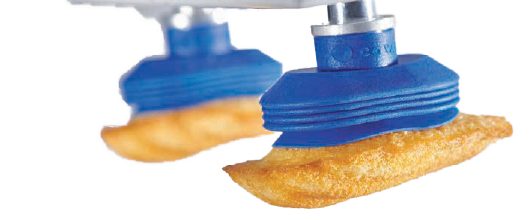
Holding force is important, but it is only one part of the application.
Vacuum gripping depends on the pressure difference between the atmosphere and the space inside the suction cup. In simple terms, the larger the effective cup area and the stronger the usable vacuum level, the more holding force may be available.
However, real applications are not based on holding force alone. Part weight, movement, acceleration, orientation, surface condition, friction, cup style, and safety factor all affect whether the part can be handled reliably.
Scott Equipment’s Role
Scott Equipment Company helps customers look beyond the basic holding-force calculation and review how the part will actually move through the machine, robot cell, or automation process.
Cup Area Matters
Larger effective cup area can increase available holding force, but the cup still needs to seal properly against the part surface.
Vacuum Level Matters
A stronger usable vacuum level may increase holding force, but leaks, porous materials, tubing restrictions, and flow limitations can reduce actual performance.
Motion Changes the Requirement
A cup that holds a part when stationary may not hold through a fast robot move, vertical lift, sharp direction change, or sudden acceleration.
Stationary Holding Is Not the Same as Production Handling
A cup may be able to hold a part when everything is stationary, but that does not automatically mean it will hold the part through a fast robot move, a sharp direction change, or a vertical lift. Vacuum applications should be reviewed based on the full motion of the machine, not just the weight of the part.
Vacuum Cups & Pads
Vacuum cup selection starts where the system touches the part.
The vacuum cup is the contact point between the system and the workpiece. That makes cup and pad selection one of the most important decisions in the application.
Cup shape, size, material, flexibility, sealing edge, mounting style, and wear resistance can all affect performance. A cup that works on a dry, flat part may fail on an oily machined component. A cup that seals well on smooth plastic may wear quickly on rough cardboard.
Scott Equipment’s Role
Scott Equipment Company helps customers compare cup style, material, and mounting options based on the actual part, production environment, cycle rate, robot motion, and machine movement.
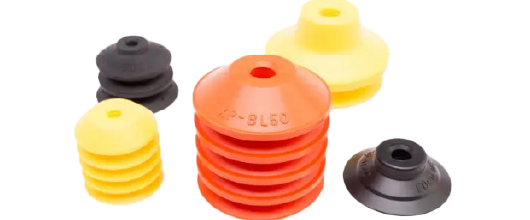
Flat Cups
Often used for smooth, rigid, non-porous parts where stability and low deflection are important.
Bellows Cups
Can help with curved, uneven, or height-varying parts, but should not automatically be used to solve every mechanical issue.
Oval Cups
Useful when the part has a long, narrow gripping area or when a round cup does not provide the right contact pattern.
Foam Pads
Helpful when the workpiece is rough, irregular, porous, or difficult for a traditional rubber cup to seal against.
Specialty Cups
Used for oily metal, hot plastic, rough cardboard, film, food packaging, electronics, and other demanding applications.
Cup Materials
Food, packaging, pharmaceutical, electronics, oily part, and high-temperature applications may require specific cup materials.
The Right Cup Is Not Always the Most Obvious Cup
A vacuum cup should be selected around the part, surface condition, movement, environment, and release requirement. The right answer may be a flat cup, bellows cup, oval cup, specialty material, foam pad, or a different gripping approach entirely.
Scott Equipment can help customers compare standard vacuum components with more advanced options such as intelligent vacuum technology, application-specific vacuum handling solutions, foam-based gripping options, and flexible automation approaches such as soft robotic gripping.
Compensators, Dampeners & Mechanical Control
Sometimes the better solution is not a softer cup.
In many vacuum applications, the best solution is not simply a taller, softer, or more flexible cup. A spring-loaded compensator or dampener can help absorb impact, account for slight height differences, and allow the robot, gantry, or actuator to approach the part more consistently.
This can improve part contact while reducing the amount of cup deflection, settling, shaking, or overtravel that can create problems during production movement.
Scott Equipment’s Role
Scott Equipment Company helps customers review whether the application needs a different cup style, a compensator, a dampener, a mounting change, or a more stable EOAT layout to improve how the vacuum system contacts the part.
Impact Absorption
When a robot, gantry, or actuator approaches the part at production speed, a compensator can help absorb some of the contact force.
Height Variation
If parts are not always presented at the exact same height, a compensator can help account for small differences in part position.
Less Programming Sensitivity
The robot or actuator may not need to stop at an absolutely perfect position every cycle when the tooling can absorb small variations.
Reduced Cup Deflection
Instead of relying on a tall bellows cup to absorb movement, a flatter cup with a compensator may create a more stable grip.
Better Contact Can Lead to Better Vacuum Performance
Vacuum reliability is not only about suction. How the cup reaches the part, how much force is applied, how much the cup deflects, and how the tooling moves after pickup can all affect whether the system performs consistently.
Complete Vacuum Circuit Support
A vacuum system depends on more than the cup and generator.
A reliable vacuum circuit includes the contact point, vacuum source, valves, sensing, filtration, tubing, fittings, mounting hardware, and release method. Each part of the circuit can affect pickup speed, holding reliability, troubleshooting, and long-term maintenance.
When these components are reviewed together, the system is easier to build, easier to install, easier to troubleshoot, and more repeatable from one machine or tool to the next.
Scott Equipment’s Role
Scott Equipment Company helps customers review the complete vacuum circuit, including the components that often determine whether the system performs reliably in production.
Part Contact Components
Vacuum cups, pads, cup adapters, compensators, and mounting hardware create the physical connection between the tooling and the workpiece.
Vacuum Generation
Vacuum ejectors, multi-stage generators, and electric vacuum pumps should be selected around flow, response time, system layout, and available compressed air.
Valves & Blow-Off Control
Vacuum valves, blow-off valves, and air control components help manage pickup, hold, release, and cycle timing.
Sensors & Confirmation
Pressure sensors, flow switches, vacuum switches, and gauges can help confirm pickup and support setup, maintenance, and troubleshooting.
Filters & Protection
Filters, separators, and protective accessories help reduce issues caused by dust, liquids, debris, and contamination entering the vacuum circuit.
Tubing, Fittings & Flow Path
Vacuum performance can be limited by undersized tubing, long runs, poor routing, kinks, restrictions, or fittings that reduce system flow.

Tubing, Fittings, and Flow Path Matter
Vacuum performance can be limited by more than the generator or cup. Tubing that is too small, too long, poorly routed, kinked, or not rated for the environment can reduce response time, holding reliability, and release performance.
Vacuum Generators, Pumps & Flow
The vacuum source should match the flow requirement, cycle time, and system layout.
Choosing the right vacuum source is a major part of building a reliable system. Some applications are best served by a compact ejector located close to the cup. Others may require more flow, multiple cups, faster evacuation, or a centralized pump system.
The best choice depends on the part, cup layout, available compressed air, vacuum level, required flow, response time, machine layout, maintenance access, and production goals.
Scott Equipment’s Role
Scott Equipment Company helps customers review vacuum source options based on flow, response time, cup layout, compressed air usage, installation requirements, and long-term maintenance needs.
Compressed Air Ejectors
Vacuum ejectors use compressed air to generate vacuum at or near the point of use. They are commonly used on robot EOAT, compact automation systems, pick-and-place tooling, and localized vacuum applications.
Multi-Stage Vacuum Generators
As cup size increases or as more cups are added, the system may need more flow. Multi-stage ejectors can help evacuate air faster and build vacuum more quickly.
Electric Vacuum Pumps
Electric vacuum pumps may be used when a pump-based or centralized system makes more sense than compressed air ejectors, especially when multiple stations or higher flow requirements are involved.
Point-of-Use Vacuum
Point-of-use vacuum places the ejector or vacuum source close to the cup or EOAT. This can reduce line volume, improve response time, and simplify localized control on robot tooling or compact automation systems.
Centralized Vacuum
Centralized vacuum may make sense when multiple stations require vacuum, when maintenance access is important, or when heat, noise, compressed air usage, exhaust, or system-wide flow requirements need to be reviewed.
For applications that require efficient vacuum generation and smarter control, Scott Equipment Company can help customers review vacuum pump options based on flow, cup layout, cycle rate, and production goals.
Flow Can Be Just as Important as Vacuum Level
A vacuum source may be able to reach the required vacuum level, but still struggle if it cannot move enough air quickly enough. Cup size, part porosity, leaks, tubing volume, and cycle time all affect how much flow the application needs.
Vacuum Saving Valves & Zoning
Smarter zoning can help multi-cup tools handle part variation.
Applications with multiple cups can become complicated quickly. If a vacuum head needs to pick different part sizes, different shapes, or random orientations, a traditional zoning approach may require multiple sensors, valves, PLC logic, and control zones.
Vacuum saving valves can help simplify that approach by limiting vacuum loss from cups that are open to atmosphere while allowing the cups that contact the part to grip.
Scott Equipment’s Role
Scott Equipment Company helps customers review when vacuum saving valves, cup zoning, foam gripping, or a different EOAT layout may be the better approach for handling part variation in production.
Mixed Part Sizes
One vacuum tool may need to pick both small and large parts without requiring every cup to contact every workpiece.
Random Orientations
Parts may not always appear in the exact same position, especially in packaging, conveyor, bin, or product-transfer applications.
Multiple Cup Arrays
Large EOAT heads may use many cups, but not every cup will contact every part during every pick cycle.
Packaging & Handling
Boxes, sheets, cartons, bags, pouches, and irregular product patterns may benefit from a more flexible vacuum approach.
How Vacuum Saving Valves Help
When a cup is open to atmosphere, the valve limits vacuum loss. When the cup contacts the workpiece, the valve opens and allows that cup to grip. This helps the tool respond to the part pattern without controlling every cup as a separate zone.
What Still Needs to Be Reviewed
Cup size, flow demand, vacuum source capacity, tubing layout, sensing strategy, part porosity, and release method still need to be reviewed so the system performs reliably at production speed.
Let the Cup Array Respond to the Part
Vacuum saving valves can help a multi-cup tool adapt to different part sizes, shapes, and orientations without requiring every unused cup to become a major vacuum leak.
When Traditional Vacuum Is Not Enough
Some parts need more than a standard vacuum cup.
Some applications are difficult for traditional vacuum cups. The part may be too porous, the surface may be too rough, the environment may be too dirty, or the material may not allow a consistent seal.
In those cases, the solution may require a specialty cup, foam gripping, non-contact gripping, a different vacuum source, a different EOAT layout, or a completely different handling strategy.
Scott Equipment’s Role
Scott Equipment Company helps customers review difficult vacuum applications and compare practical options such as specialty cups, foam vacuum grippers, Bernoulli-style grippers, vacuum saving valves, and alternate EOAT approaches.
Porous Materials
Cardboard, paperboard, foam, fabric, and other porous materials can allow vacuum to bleed through the part, making pickup less reliable.
Dirty Applications
Dust, debris, liquid, powder, or product residue can reduce sealing performance and may create problems if contamination is pulled into the vacuum system.
Irregular Surfaces
Rough, curved, uneven, textured, or flexible parts may not provide a stable sealing surface for a traditional suction cup.
Layered Materials
Thin sheets, films, bags, labels, or stacked materials may stick together if vacuum pulls through the top layer or disturbs the stack.
Foam Vacuum Gripping
Foam grippers can help when a traditional suction cup cannot seal consistently across rough, porous, irregular, or mixed product surfaces.
Bernoulli-Style Gripping
A Bernoulli-style gripper uses positive air flow to create a low-pressure zone. This can help with difficult materials while reducing direct suction through the part.
Alternate EOAT Layouts
Some applications may need a different cup pattern, mechanical support, part stabilizer, vacuum zone layout, or combined gripping approach.
Difficult Parts May Need a Different Handling Strategy
When standard vacuum cups struggle, the next step is not always a larger cup or stronger vacuum. The better solution may be a different cup material, a foam gripping surface, a non-contact approach, a vacuum saving valve strategy, or a redesigned EOAT layout.
Vacuum for Robotic EOAT
Vacuum EOAT connects the part, robot motion, tooling layout, and control strategy.
Vacuum and robotic automation go hand-in-hand. Many pick-and-place, packaging, palletizing, machine tending, and material handling applications rely on vacuum EOAT to grip, transfer, and release parts.
For robotic applications, the vacuum system has to work with the robot path, acceleration, wrist movement, tubing layout, part presentation, pickup confirmation, and release timing. A cup that works on a bench test still needs to perform through the full robot cycle.
Scott Equipment’s Role
Scott Equipment Company helps customers connect vacuum EOAT to the broader robotic workcell conversation, including cup selection, tooling layout, sensing, valves, tubing, robot coordination, and supporting products around robotic solutions and ABB robot applications.
EOAT Plate Design
The physical tooling structure needs to support cups, fittings, valves, sensors, compensators, and accessories without making the robot wrist crowded or difficult to maintain.
Cup Layout
The number, size, and position of cups should support the part geometry, center of gravity, pick pattern, and robot movement during the full cycle.
Pickup Confirmation
Pressure or flow sensing can help confirm part presence before the robot moves, reducing the risk of dropped parts, missed picks, or downstream process issues.
Air Line Management
Vacuum lines, pneumatic tubing, blow-off lines, and sensor cables should be routed cleanly around the robot wrist and tooling to reduce restrictions and maintenance issues.
Gentle Part Handling
Vacuum EOAT can support fragile, wrapped, finished, or delicate parts without applying mechanical clamping force directly to the workpiece.
Robot Coordination
Vacuum tooling should be reviewed with the robot path, cycle time, acceleration, part orientation, and workcell layout in mind.
Vacuum Knowledge Leads to Better EOAT Conversations
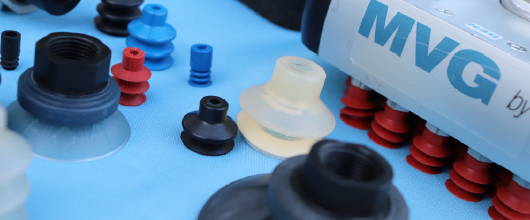
If a customer is dropping parts, wearing out cups, struggling with oily parts, picking multiple product sizes, or trying to improve cycle time, Scott Equipment Company can help review the full robotic tooling package instead of looking at one component at a time.
Applications We Can Help Support
Vacuum handling shows up across many automation and manufacturing applications.
Vacuum is commonly used to pick, move, hold, transfer, load, unload, palletize, depalletize, and release parts in automated equipment. The right approach depends on the part, the process, the machine, and the way the part needs to move through production.
Scott Equipment Company can help review vacuum applications across a wide range of automation, packaging, material handling, robotic, and machine-tending environments.
Scott Equipment’s Role
Scott Equipment Company helps customers connect the application to the right vacuum components, EOAT layout, sensing strategy, pneumatic support, and value-added assembly approach.
Robotic Pick-and-Place
Vacuum EOAT can help robots pick, transfer, orient, and release parts between conveyors, fixtures, trays, machines, and workstations.
Machine Tending
Vacuum tooling may be used to load and unload CNC machines, presses, injection molding machines, and other production equipment.
Packaging Automation
Boxes, cartons, bags, pouches, film, trays, labels, and packaging materials often require careful cup, pad, or foam gripping selection.
Palletizing & Case Handling
Vacuum tools can help move cases, cartons, trays, bags, and packaged goods in palletizing, depalletizing, and end-of-line applications.
Sheet Handling
Plastic, metal, cardboard, paperboard, glass, tile, composites, and other sheet materials may require different cup styles, spacing, and vacuum levels.
Injection Molding
Hot molded parts, textured plastic, delicate surfaces, and parts coming out of a mold may require application-specific cup material and tooling review.
Oily or Slick Parts
Machined metal, coolant, oil, or slick surface conditions may require specialty cup materials, different sealing edges, or additional part stability review.
Collaborative Robot EOAT
Cobot applications may require lightweight, flexible vacuum tooling that supports easy setup, clean routing, part sensing, and repeatable handling.
Different Applications Require Different Vacuum Strategies
A vacuum solution for a flat sheet may look very different from a vacuum tool for oily machined parts, porous cartons, flexible bags, molded plastic, or robotic case handling. Scott Equipment Company helps customers review the application before selecting the components.
Vacuum, Pneumatic & EOAT Technology Partners
Vacuum applications often require products from several technology categories.
Scott Equipment Company represents a focused group of vacuum, pneumatic, gripping, robotic, and EOAT manufacturers. This allows our team to review the application first, then help customers compare the product or technology that best fits the part, environment, cycle rate, and production goal.
From cups and ejectors to foam grippers, robot tooling, pneumatic support, and vacuum assemblies, our vendor partners help support the full vacuum application.
Scott Equipment’s Role
Scott Equipment Company helps customers connect vacuum, pneumatics, EOAT, robotics, and supporting components into a practical solution instead of treating each product category as a separate decision.

SMC
Pneumatic and vacuum components, including ejectors, cups, sensors, valves, filters, fittings, tubing, blow-off control, and related automation products.
Visit SMC
COVAL
Vacuum pumps, suction cups, vacuum grippers, vacuum switches, accessories, and intelligent vacuum solutions for automation applications.
Visit COVAL
SCHUNK
Robotic and automation technologies, including gripping, tool changing, compensation, and EOAT-related support for robotic workcells.
Visit SCHUNK
Edco
Industrial vacuum and automation support for material handling, lifting, end-of-arm tooling, and production environments.
Visit Edco
Joulin
Foam vacuum grippers for cartons, bags, porous materials, irregular surfaces, mixed products, and palletizing applications.
Visit Joulin
Anver
Vacuum lifting, vacuum components, and handling solutions for industrial material handling applications.
Visit Anver
OnRobot
End-of-arm tooling technologies for collaborative and industrial robot applications, including vacuum and gripping products.
Visit OnRobot
ABB Robotics
Robot platforms used in pick-and-place, packaging, machine tending, palletizing, and material handling applications.
Visit ABB RoboticsBringing Vacuum, Pneumatics, EOAT, and Robotics Together
Scott Equipment Company helps customers bring these technologies together by supporting the vacuum products, pneumatic components, robot tooling, EOAT hardware, sensing, tubing, fittings, and assembly support needed to complete the application.
We Build It, You Install It
Vacuum applications may need more than loose components.
Some vacuum applications require a repeatable assembly, a tested layout, or a tooling package that is easier to install, maintain, and reorder. Instead of sourcing every cup, fitting, valve, tube, sensor, and mounting component separately, customers may benefit from a more complete vacuum support package.
Scott Equipment Company can support vacuum applications through our We Build It, You Install It value-added assembly approach.
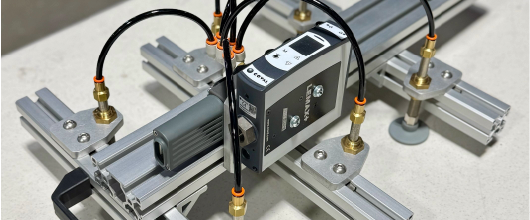
Pre-built assemblies, kits, tooling packages, and repeatable solutions for vacuum applications.
Vacuum Cup Arrays
Pre-arranged cup layouts for specific parts, product families, pick patterns, or repeatable handling requirements.
EOAT Plates
Custom or application-specific mounting plates for vacuum cups, fittings, valves, sensors, compensators, and accessories.
Valve & Sensor Assemblies
Packages that include vacuum valves, blow-off valves, sensors, fittings, tubing, and related pneumatic components.
Vacuum Manifolds
Organized air and vacuum distribution for cleaner installation, easier troubleshooting, and more repeatable machine builds.
Replacement Tooling Kits
Repeatable kits for maintenance, rebuilds, duplicate machines, or standardized replacement packages.
Application-Specific Assemblies
Built around the customer’s part, cycle rate, installation requirements, production environment, and maintenance needs.
Less Loose Parts. Cleaner Installation. More Repeatable Builds.
Instead of sourcing every component separately, customers can work with Scott Equipment Company to develop a more complete vacuum solution that reduces build time, improves consistency, and simplifies installation.
Why Scott Equipment Company?
Vacuum applications are easier to solve when the full system is reviewed.
Vacuum problems often happen when the application is reduced to one component. A cup may look correct on paper, but the system may still struggle because of the part surface, cup material, vacuum source, tubing layout, sensing, release method, robot motion, or production environment.
Scott Equipment Company helps customers look at the part, the environment, the motion, the tooling, and the production goal so the vacuum solution is built around the real application.
Backed by a Team Approach
Our Account Managers, Technical Team, Customer Service team, and vendor partners work together to help customers review vacuum applications, identify product options, and develop practical support packages.
Application Review
We help evaluate the part, surface condition, weight, cycle rate, motion profile, environment, and tooling layout before product decisions are finalized.
Product Selection
We can help compare cups, pads, ejectors, pumps, sensors, valves, filters, fittings, tubing, compensators, mounting hardware, and EOAT components.
System Details
We help review tubing, fittings, flow path, filtration, sensing, release method, mounting, and maintenance details that can determine whether the system works reliably.
Troubleshooting Support
We help customers review why a system may be dropping parts, wearing cups, losing vacuum, releasing slowly, clogging filters, or failing inconsistently.
Robotic EOAT Support
We understand how vacuum fits into robot tooling, machine tending, packaging, palletizing, collaborative robots, and pick-and-place applications.
Value-Added Assemblies
Through We Build It, You Install It, we can help support vacuum cup arrays, EOAT plates, valve packages, manifolds, kits, and application-specific assemblies.
Scott Equipment Company Helps Customers Solve Vacuum Applications
Scott Equipment Company is more than a source for vacuum components. We help customers review the application, identify the right products, and build practical support packages around real production challenges.
Common Vacuum Application Challenges
Vacuum problems usually show up as production problems.
Dropped parts, worn cups, slow release, inconsistent pickup, and unreliable part handling are often symptoms of a larger application issue. The problem may be the cup, but it may also involve the vacuum source, tubing, fittings, filters, sensors, valves, part surface, robot motion, or release method.
Scott Equipment Company helps customers review the full application so the troubleshooting conversation does not stop at one component.
Scott Equipment’s Role
Our team can help bring the right Account Manager, Technical Team member, vendor resource, or application support into the conversation to review the challenge and identify practical product options.
The Cup Is Wearing Too Fast
Cup material, surface condition, friction, part temperature, tooling movement, and contact force may need to be reviewed.
The Part Is Dropping
Cup selection, vacuum level, available flow, sensing, tubing restrictions, part weight, and machine movement may all affect holding reliability.
Release Is Too Slow
Blow-off control, valve selection, tubing volume, release timing, and cup style may need to be adjusted to improve cycle time.
Vacuum Is Inconsistent
Leaks, tubing restrictions, clogged filters, poor sensing, changing part surfaces, and part-to-part variation can all contribute to inconsistent pickup.
The Part Is Oily or Slick
Machined parts, coolant, oil, and slick surface conditions may require specialty cup materials, different sealing edges, or more stable tooling support.
The Tool Handles Multiple Parts
Vacuum saving valves, foam gripping, cup zoning, or a different EOAT layout may help when parts vary in size, shape, orientation, or surface condition.

Troubleshooting Starts with the Whole Application
A vacuum issue may look like a cup problem, but the root cause can come from flow, sensing, tubing, filtration, part variation, tooling movement, or release control. Reviewing the full application helps identify the right path forward.
Related Vacuum & Automation Resources
Continue exploring vacuum, EOAT, robotics, and value-added assembly support.
Vacuum applications often connect to a larger automation conversation. A customer may start with a suction cup problem, but the final solution may involve robotic EOAT, foam gripping, vacuum pumps, pneumatic controls, safety, or a pre-built assembly.
Use the resources below to learn more about related Scott Equipment Company solutions and product support areas.
Scott Equipment’s Role
Scott Equipment Company helps customers connect vacuum components to the surrounding automation system, including robot tooling, pneumatic controls, value-added assemblies, and application support.
Vacuum Technology
Learn more about intelligent vacuum solutions, vacuum pump options, and application-specific vacuum handling technologies.
Robotics & EOAT
Explore how vacuum fits into robotic workcells, ABB robot applications, EOAT layouts, foam gripping, and flexible part handling.
Value-Added Support
Review value-added assembly support, flexible gripping options, and ways to connect with Scott Equipment Company for application help.
From One Vacuum Question to the Complete Automation Solution
Whether the next step is reviewing a vacuum pump, robot EOAT, foam gripper, pre-built assembly, or a complete automation workcell, Scott Equipment Company can help connect the application to the right support path.
Vacuum Application FAQ
Common questions about vacuum cups, vacuum systems, EOAT, and application support.
Vacuum applications can involve cups, pads, ejectors, pumps, valves, sensors, tubing, fittings, compensators, filters, blow-off control, robotic EOAT, and value-added assemblies. These questions help explain how Scott Equipment Company supports vacuum applications from a practical product and implementation standpoint.
Can Scott Equipment Company help troubleshoot an existing vacuum system?
Yes. Scott Equipment can help review common vacuum problems such as dropped parts, worn cups, slow release, vacuum loss, poor sensing, contamination, clogged filters, and inconsistent pickup. Our team helps customers look at the full application instead of only replacing one component.
What information is helpful when reviewing a vacuum application?
Helpful details include the part material, surface condition, weight, size, pick orientation, cycle rate, motion profile, available compressed air, cup layout, tubing distance, sensing requirements, release method, and production environment.
How do I choose the right vacuum cup or pad?
Vacuum cup selection depends on the part surface, shape, weight, material, temperature, oil or dust exposure, cycle rate, robot or machine movement, and release requirement. Flat cups, bellows cups, oval cups, foam pads, and specialty materials each fit different applications.
Should I use a vacuum ejector or an electric vacuum pump?
The right vacuum source depends on the required flow, response time, available compressed air, cup layout, distance from the vacuum source to the cup, maintenance access, and whether the system is point-of-use or centralized. Scott Equipment can help customers compare these options.
Can Scott Equipment help with robotic vacuum EOAT?
Yes. Scott Equipment can help review vacuum cups, foam grippers, ejectors, pumps, sensors, tubing, fittings, valves, blow-off, vacuum saving valves, EOAT plates, and robotic tooling layouts for pick-and-place, packaging, palletizing, machine tending, and material handling applications.
What are vacuum saving valves used for?
Vacuum saving valves can help multi-cup tools handle different part sizes, shapes, or orientations by limiting vacuum loss from cups that are open to atmosphere. They can be helpful when not every cup contacts every part during every pick cycle.
Can Scott Equipment build vacuum assemblies?
Yes. Through We Build It, You Install It, Scott Equipment can help support vacuum cup arrays, EOAT plates, valve and sensor assemblies, vacuum manifolds, replacement tooling kits, and application-specific assemblies.
What vendors does Scott Equipment support for vacuum applications?
Scott Equipment supports vacuum, pneumatic, gripping, robotic, and EOAT technologies from manufacturers such as SMC, COVAL, SCHUNK, Edco, ABB Robotics, Anver, Joulin, and OnRobot.
Review Your Vacuum Application
Need help matching vacuum components to your part, machine, or robot application?
Contact Scott Equipment Company to discuss vacuum cups, pads, pumps, ejectors, sensors, valves, filters, fittings, tubing, compensators, blow-off control, robotic EOAT, and value-added vacuum assemblies.
Scott Equipment Company provides trusted automation solutions and application support for manufacturers throughout North and South Carolina.
Trusted Automation Solutions for the Carolinas Since 1977.