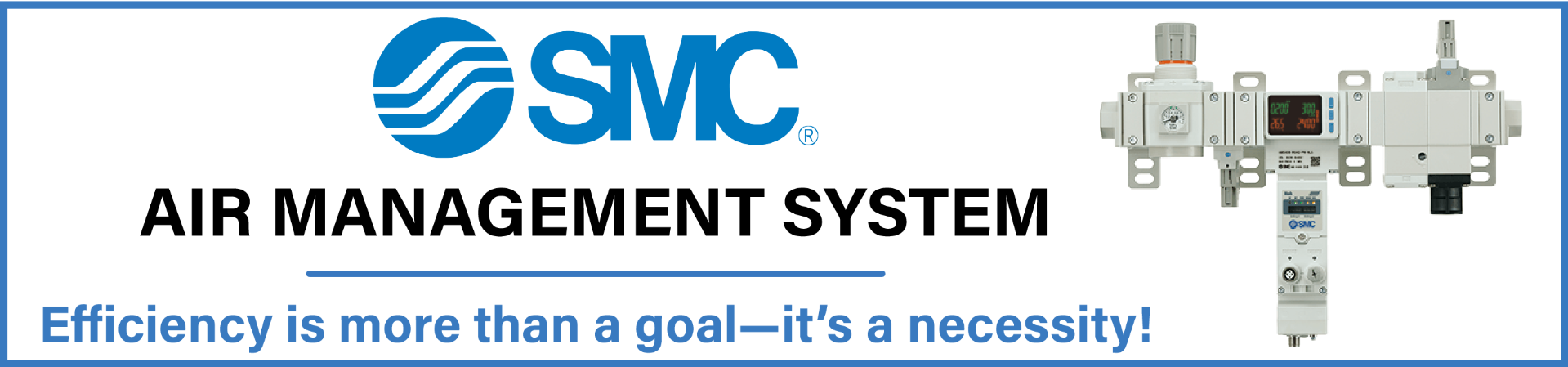
SMC Air Management System (AMS) - Efficiency is a Necessity
In today’s industrial landscape, efficiency is more than a goal—it’s a necessity. For facilities that rely on pneumatic systems, managing energy consumption and operational costs is often a significant challenge. Compressed air, while essential, is one of the most energy-intensive utilities in manufacturing, and inefficiencies can lead to escalating costs, unnecessary waste, and missed opportunities for improvement.
The SMC Air Management System (AMS) offers a solution designed specifically for decision-makers who prioritize operational efficiency and cost-effectiveness. By addressing common pain points in pneumatic systems—such as air waste, unplanned downtime, and outdated data collection methods—the AMS delivers a streamlined approach to managing compressed air with precision and control.
Whether you’re looking to reduce energy expenses, extend equipment life, or align your facility with sustainability goals, the AMS provides a scalable, adaptable system to meet your needs. In this article, we’ll explore what the AMS is, how it works, and why it’s a game-changer for facilities aiming to modernize and save.
What is the SMC Air Management System (AMS)?
The SMC Air Management System (AMS) is a powerful tool designed to optimize pneumatic operations by reducing air consumption, enabling predictive maintenance, and providing real-time data for decision-making. At its core, the AMS integrates multiple components into a cohesive system, allowing facilities to gain better control over compressed air usage while reducing costs and waste.
Key Components of the AMS
The AMS is composed of several modular elements that work together seamlessly:
- Flow Meters: Monitor air flow in real time, helping identify inefficiencies and track consumption patterns.
- Electronic Regulators: Adjust air pressure dynamically to ensure optimal performance without overusing resources.
- Residual Pressure Relief Valves: Automatically reduce unnecessary air usage during machine downtime.
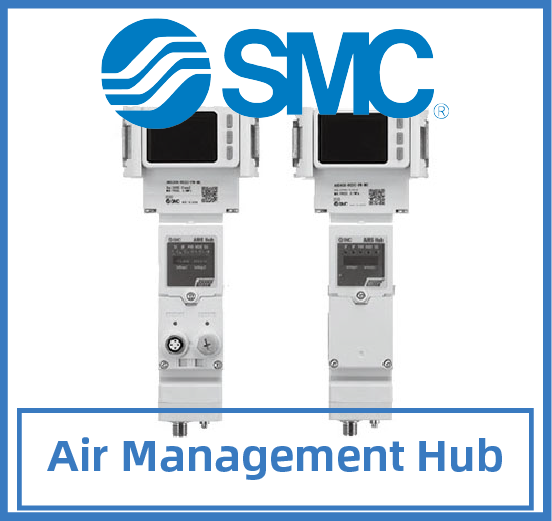
- Air Management Hub: Acts as the central controller, collecting and transmitting data across the system for analysis and integration.
- Wireless and Network Connectivity: Compatible with protocols like EtherCAT, PROFINET, and OPC UA, the AMS connects to existing industrial networks or directly to IT infrastructures, making integration straightforward.
A System Built for Modern Facilities
What sets the AMS apart is its adaptability. It can function as a standalone solution or integrate into broader automation networks. Whether facilities rely on wired or wireless setups, the AMS’s modular design ensures compatibility with a wide range of industrial environments.
Data-Driven Efficiency
One of the AMS’s standout features is its ability to provide raw, actionable data. Unlike proprietary systems that lock users into specific software, the AMS delivers open data that can be analyzed using the facility’s existing tools. This approach avoids costly software transitions and opens the system to broader adoption, making it easier for facilities to achieve their efficiency goals.
With these components and capabilities, the AMS offers decision-makers a practical way to reduce waste, improve system reliability, and align operations with sustainability initiatives.
How the AMS Makes Pneumatic Facilities More Efficient
Efficiency is the cornerstone of any successful facility, and for operations relying on compressed air, the SMC Air Management System (AMS) provides a clear path to achieving it. By addressing three critical areas—air waste, maintenance practices, and energy consumption—the AMS helps facilities reduce costs and operate more effectively.
- Reducing Air Waste
Compressed air is a costly utility, and inefficiencies such as leaks or excessive pressure can significantly increase expenses. The AMS tackles this problem with its eco mode feature, which minimizes air consumption during downtime.
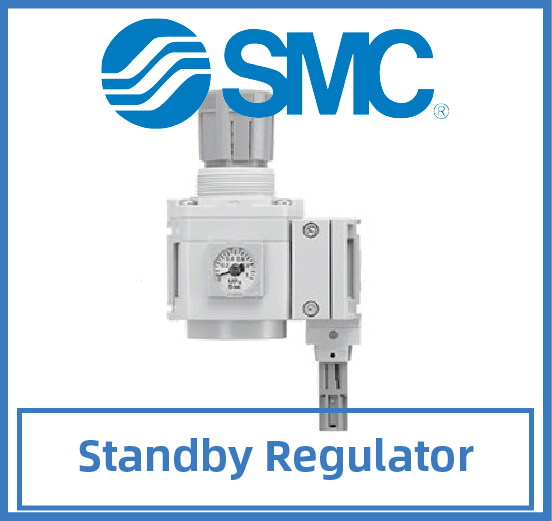
For example, when machines are idle—whether during breaks, production stops, or between shifts—the AMS reduces the pressure to a standby mode. This simple adjustment cuts air usage dramatically, lowering costs without compromising system readiness. Facilities that experience variable machine activity see immediate savings by avoiding unnecessary air waste.
- Enabling Condition-Based Maintenance
Traditional maintenance schedules often rely on fixed time intervals, leading to either excessive servicing or unexpected equipment failures. The AMS transforms this process by enabling condition-based maintenance, a smarter approach that uses real-time data to trigger maintenance only when needed.
Using sensors to monitor flow, pressure, and temperature, the AMS collects raw data that can be integrated into the facility’s existing software systems. This data allows operators to compare current performance against the baseline of a "healthy machine." If deviations occur, operators can address potential issues before they escalate, preventing costly downtime and extending the lifespan of pneumatic components.
- Saving Energy and Lowering Costs
Compressed air systems are among the largest energy consumers in most facilities, but the AMS helps reduce their environmental and financial impact. By optimizing air pressure, managing idle time, and ensuring only the necessary amount of air is used, the AMS significantly lowers energy consumption.
The system’s ability to integrate with both industrial networks and IT infrastructures ensures that facilities can monitor usage and savings in real time. This transparency helps decision-makers identify opportunities for further improvements and quantify their return on investment (ROI) in energy savings.
A Holistic Approach to Efficiency
By reducing air waste, enabling predictive maintenance, and cutting energy costs, the AMS provides a comprehensive solution to optimize pneumatic operations. Facilities not only save money but also align their operations with sustainability goals, a critical factor for staying competitive in today’s market.
Why Decision-Makers Should Consider the AMS
For facilities looking to improve efficiency, reduce costs, and meet sustainability goals, the SMC Air Management System (AMS) offers a solution that is as practical as it is transformative. Here’s why decision-makers should see the AMS as an investment in smarter, more sustainable operations.
- Scalable and Adaptable to Your Needs
The AMS is designed to fit facilities of various sizes and operational complexities. Its modular architecture allows it to adapt to different setups, from a single machine to larger systems with multiple components. Whether your facility relies on traditional pneumatic setups or cutting-edge automation, the AMS can integrate seamlessly with your current operations.
For facilities with legacy equipment, the AMS offers wireless communication options that reduce the need for costly infrastructure upgrades. This scalability ensures that the AMS can grow alongside your facility’s needs, providing both immediate and long-term benefits.
- Seamless Integration with Existing Systems
One of the AMS’s standout features is its ability to work with existing networks and software. By avoiding proprietary software, the AMS offers flexibility and compatibility with commonly used industrial protocols like EtherCAT, PROFINET, and OPC UA. Facilities that already have data collection and management tools in place can simply plug the AMS into their systems and start gathering actionable data.
For facilities without advanced automation, the AMS offers direct IT server connectivity, bypassing the need for full-scale industrial network integration. This versatility makes it suitable for both advanced and developing operations.
- Aligning with Corporate Sustainability Goals
Sustainability is more than a buzzword—it’s a priority for companies seeking to meet environmental regulations and corporate social responsibility goals. The AMS helps facilities achieve these goals by significantly reducing compressed air waste and lowering energy consumption. With its eco mode and real-time monitoring capabilities, the AMS not only saves money but also reduces your facility’s carbon footprint.
For companies working with clients or partners that emphasize green initiatives, the AMS provides an additional selling point. Machine builders, for example, can offer the AMS as a value-added feature, positioning their equipment as energy-efficient and environmentally responsible.
- Clear ROI for Cost-Conscious Facilities
Every facility must weigh upfront costs against long-term benefits. The AMS offers a compelling ROI by addressing multiple aspects of operational efficiency. Facilities that utilize all three of the AMS’s primary benefits—energy savings, condition-based maintenance, and digitalization—see the fastest payback periods.
Even when only one or two benefits are implemented, the AMS delivers measurable savings by reducing air consumption and preventing expensive downtime. These savings make the AMS a financially sound choice for facilities looking to maximize their budgets.
- Staying Ahead in a Competitive Market
Industries across the board are moving toward automation and data-driven operations. Facilities that invest in the AMS position themselves as forward-thinking leaders in their markets. By embracing modern tools like the AMS, decision-makers can ensure their operations remain efficient, competitive, and prepared for future challenges.
The AMS isn’t just a product—it’s a tool for achieving smarter operations, better resource management, and long-term cost savings. For decision-makers looking to modernize their facilities, the AMS is a logical choice that delivers immediate results while preparing for tomorrow’s challenges.
Real-World Applications
The SMC Air Management System (AMS) has demonstrated its ability to improve efficiency, reduce costs, and optimize operations in facilities with pneumatic systems. By focusing on real-time air management, energy savings, and data-driven maintenance, the AMS delivers measurable results that decision-makers can rely on.
- Success Stories
The AMS has been successfully implemented in a variety of facilities, achieving notable outcomes:
- Reduced Air Consumption: In one case, a facility using the AMS’s eco mode was able to reduce compressed air consumption by 50% during machine idle times. This approach allowed them to save on energy costs while maintaining readiness for production.
- Improved Maintenance Practices: Another facility used the AMS to monitor system performance and shift to condition-based maintenance. By tracking flow, pressure, and other key metrics, they identified and addressed potential issues before breakdowns occurred, preventing downtime and extending equipment life.
- Simplified Integration: A facility integrated AMS with its existing systems to streamline data collection. Using wireless communication, they avoided the high costs of installing additional wired networks while still achieving seamless operation and real-time data analysis.
- Wireless Technology and Cost Savings
Wireless functionality is one of the AMS’s most impactful features, reducing the need for expensive wiring in large facilities. For example, one customer reported that installing a new network drop on their factory floor cost approximately $5,000 per connection. By using SMC’s wireless technology, they eliminated these expenses and reinvested the savings into additional AMS units, multiplying their efficiency gains.
- Aligning with Operational Goals
The AMS doesn’t just save money—it aligns with broader operational and sustainability goals. By reducing air waste and cutting energy consumption, it allows facilities to meet energy reduction targets and improve environmental performance. This dual impact—cost savings and sustainability—makes the AMS a compelling choice for decision-makers.
The AMS provides practical, measurable benefits that address the real challenges faced by pneumatic facilities. Whether it’s reducing air consumption, improving maintenance practices, or cutting costs through wireless solutions, the AMS offers an effective way to enhance operations and achieve long-term savings.
Practical Tips for Implementing the AMS
Successfully implementing the SMC Air Management System (AMS) requires a clear understanding of your facility’s needs and careful planning to ensure maximum efficiency. Here are some practical tips to guide decision-makers through the process:
- Involve the Right Stakeholders
The success of the AMS depends on the involvement of key personnel:
- Facilities Managers: They oversee energy consumption and are often responsible for achieving efficiency goals.
- Maintenance Teams: These teams will interact with the AMS daily, monitoring data and performing condition-based maintenance.
- IT Professionals: If integrating the AMS into an IT infrastructure or using digitalization features, IT personnel should be involved from the beginning.
- OEM Sales Teams: For machine builders, the AMS can be marketed as an energy-efficient feature to customers, so engaging sales teams early is important.
- Assess Your Facility’s Needs
Before installing the AMS, identify specific operational challenges:
- Are there significant periods of machine idle time?
- Does your facility already use condition-based maintenance, or is it time to adopt this approach?
- Do you have an existing industrial network or IT infrastructure to support data integration? Answering these questions will help determine which AMS features to prioritize.
- Plan for Integration
The AMS is designed to work seamlessly with most facilities, but a few considerations can simplify installation:
- Network Connectivity: Decide whether to use a wired, wireless, or hybrid setup. Wireless options reduce infrastructure costs and are ideal for hard-to-reach equipment.
- Data Integration: Ensure the AMS can connect to your existing software systems via compatible protocols like OPC UA, EtherCAT, or PROFINET.
- Machine-Specific Deployment: Each AMS unit should be dedicated to a single machine for optimal performance. Grouping multiple machines under one system can limit its effectiveness.
- Start Small and Scale Gradually
If you’re introducing the AMS to your facility for the first time, start with a small-scale deployment:
- Choose a machine or process with clear inefficiencies, such as high air consumption or frequent downtime.
- Monitor the results and calculate ROI before expanding to other areas. This approach minimizes risk and builds confidence in the system’s capabilities.
- Focus on ROI
Clearly communicate the AMS’s financial benefits to stakeholders by emphasizing its impact on energy savings, reduced downtime, and lower maintenance costs. Highlight how each of these contributes to a faster return on investment. For example:
- Use the AMS’s eco mode to reduce air consumption during idle times, which directly lowers utility bills.
- Implement condition-based maintenance to prevent costly repairs and equipment failures.
- Leverage Wireless Capabilities
Wireless communication can significantly reduce installation costs and simplify system expansion:
- Use the AMS’s wireless features to connect remote equipment without extensive wiring.
- Take advantage of SMC’s simplified pairing process for wireless devices to reduce setup time and complexity.
- Train Your Team
Ensure all relevant team members understand how to use the AMS:
- Train operators to switch between modes (e.g., eco mode and run mode) based on production needs.
- Teach maintenance staff to analyze data and identify potential issues for condition-based maintenance.
- Provide IT teams with the resources needed to integrate AMS data into existing systems.
By following these tips, decision-makers can maximize the benefits of the AMS, from reducing air waste to achieving long-term cost savings. With careful planning and the right team in place, implementing the AMS becomes a straightforward process that yields significant operational improvements.
Conclusion
The SMC Air Management System (AMS) offers a clear path for facilities to reduce costs, save energy, and modernize their pneumatic operations. By addressing common challenges such as air waste, reactive maintenance, and data integration, the AMS empowers decision-makers to achieve greater efficiency and align their operations with sustainability goals.
Whether your facility is looking to optimize idle time, adopt condition-based maintenance, or integrate real-time data into existing systems, the AMS delivers a scalable, flexible solution that adapts to your needs. With its modular design, compatibility with industrial networks, and wireless options, the AMS makes implementation straightforward and cost-effective.
Investing in the AMS is not just about saving money today—it’s about future-proofing your operations. By reducing energy consumption, extending equipment life, and embracing modern technologies, facilities can remain competitive in an ever-evolving industrial landscape.
Now is the time to take the next step. Explore how the AMS can transform your pneumatic operations, reduce your carbon footprint, and position your facility for long-term success. Contact your local Scott Equipment representative to learn more or to schedule a consultation today.
Associated Products